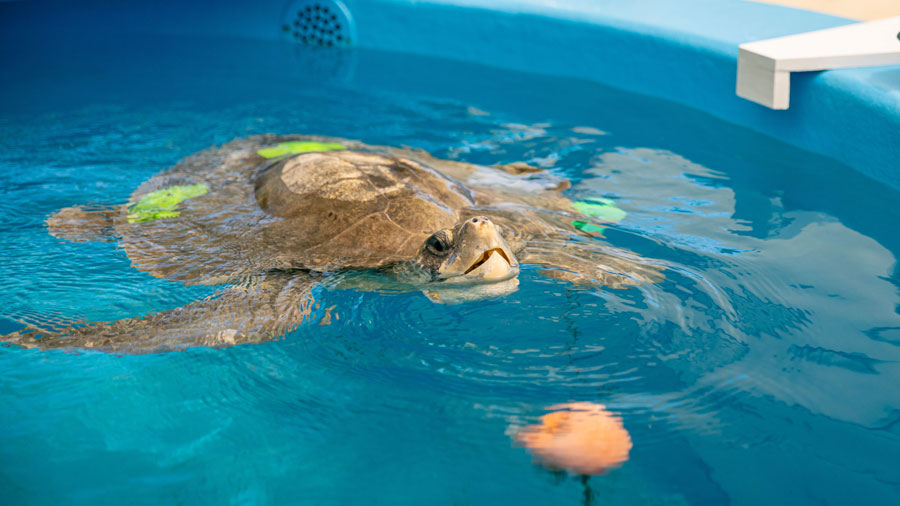
ORP’s Veterinary Training Programme offers a unique opportunity for veterinary surgeons working with exotics or wildlife to train in sea turtle medicine in a teaching hospital environment. Our clinical facilities in the Maldives are among the few in the world where olive ridley turtles are treated in a hospital setting.
With nearly 50 years of combined experience, our veterinary team is one of the largest and most knowledgeable sea turtle veterinary teams in the world. They are supported by Maldivian interns and international volunteers, creating a dynamic environment for learning, collaboration, and conservation.
About Maldives
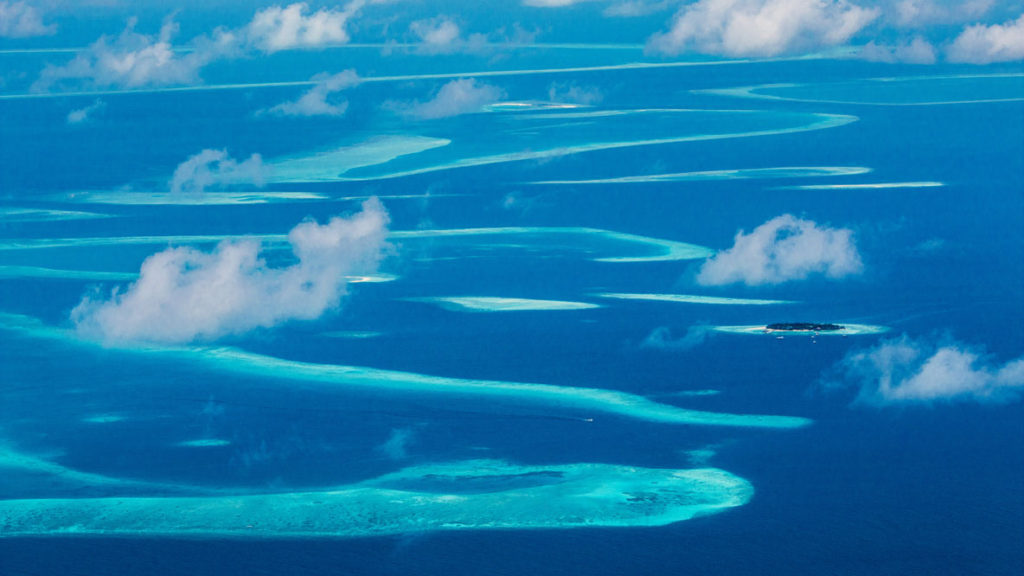
The Republic of Maldives is a nation of coral islands situated in the Indian Ocean. The country spans roughly 90,000 square kilometres divided into twenty-six atolls with approximately 1,190 islands. It is the smallest Asian country by both land area and population (with just over 500,000 people!). Maldives is famous for its sandy white beaches, crystal clear turquoise waters, beautiful coral reefs, and colourful marine life. It truly is magical, both over and under water!
About ORP

Olive Ridley Project (ORP) was established in 2013 to actively fight ghost gear in the Indian Ocean. Since then, we have expanded our mission to take a multifaceted and holistic approach to protecting sea turtles and their habitats. We do this through rescue and conservation medicine, scientific research, and educational outreach.
We operate several sea turtle clincial facilities in the Maldives, and run one of the largest sea turtle Photo-ID databases in the world. We have team members stationed in several atolls in the Maldives as well as in Kenya, Oman, Pakistan, and Seychelles. You can meet the team here and read more about the Olive Ridley Project here.
ORP is a registered charity (1165905) in England & Wales, the Maldives (CR/04/2022), and in Kenya (NGO-EPFPJ6). The Veterinary Training Programme is delivered by ORP – Maldives.
About the Sea Turtle Health Institute
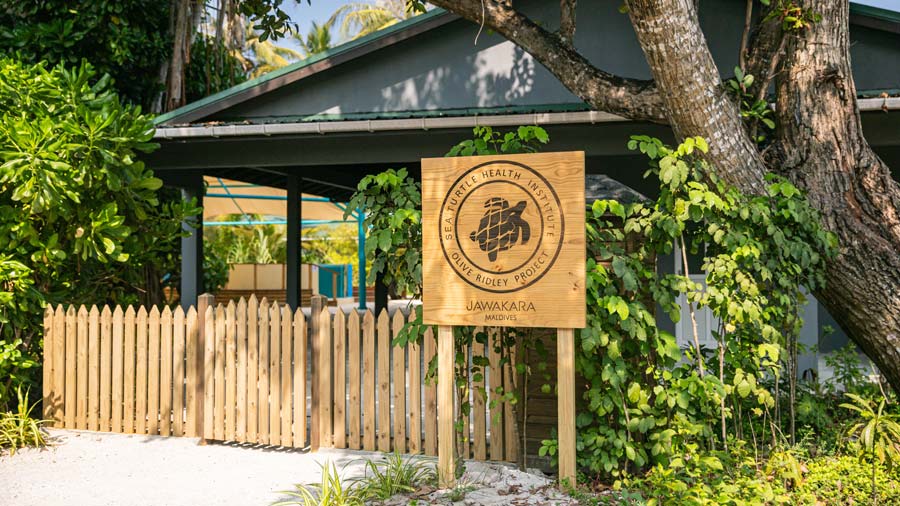
The Sea Turtle Health Institute of Maldives (STHI) is ORP’s flagship campus for clinical care, professional training, and ocean health research, all guided by the One Health model that connects the wellbeing of animals, humans, and ecosystems. It opened in early 2026 in collaboration with Jawakara Islands Maldives and is located in Lhaviyani Atoll.
Every part of the facility has been purpose built to maximise patient care, reduce patient stress, and ensure a smooth as well as efficient clinical delivery system. In addition to several patient tanks, STHI houses intensive care unit (ICU) tanks in the critical care area located at the back of the facility away from public eye, providing quiet, focused care to the most vulnerable patients. This marks the first sea turtle ICU in the Indian Ocean region.
Together, these elements capture our vision of a ‘Sea Turtle University’ – a hub for advanced clinical efforts, research, and professional training, that stands amongst the most comprehensive facilities for sea turtle conservation medicine in the world.
Most of our turtle patients are ghost gear and marine debris entangled victims. We also have patients who have been found floating, diseased, or with traumatic injuries, and some suspected former pets. Olive ridley turtles make up the biggest patient numbers.
About the clinic
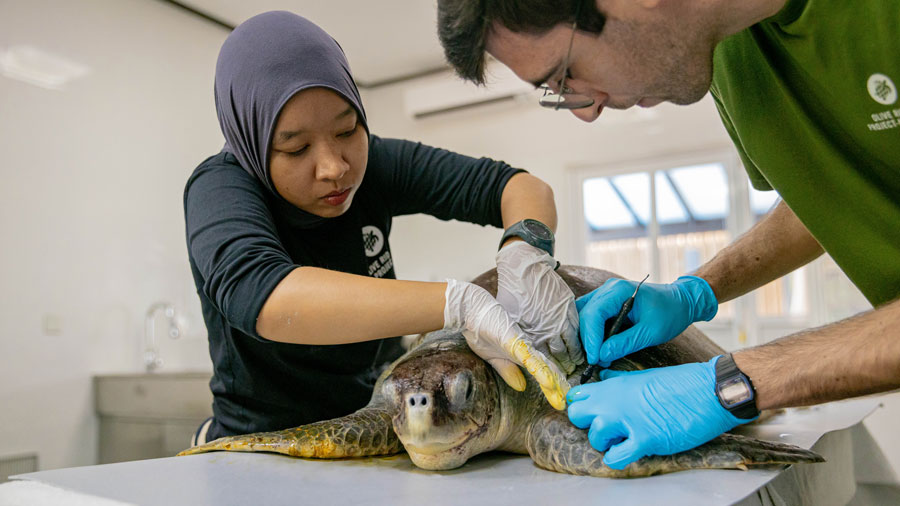
The clinic at STHI is the most advanced sea turtle medical facility in the western Indian Ocean and functions as a busy teaching hospital. It is equipped with:
- A full diagnostic and blood laboratory
- Pharmacy
- Microscopy
- Class-4 therapeutic laser
- Ultrasonography
- Endocsopy
- Digital radiography system
- A full surgical suite
We are able to triage and treat any injury or condition faced by sea turtles in Maldivian waters. We also serve as an expert resource for other rescue centres in the country and region, as well as for the Maldivian government.
About the training experience
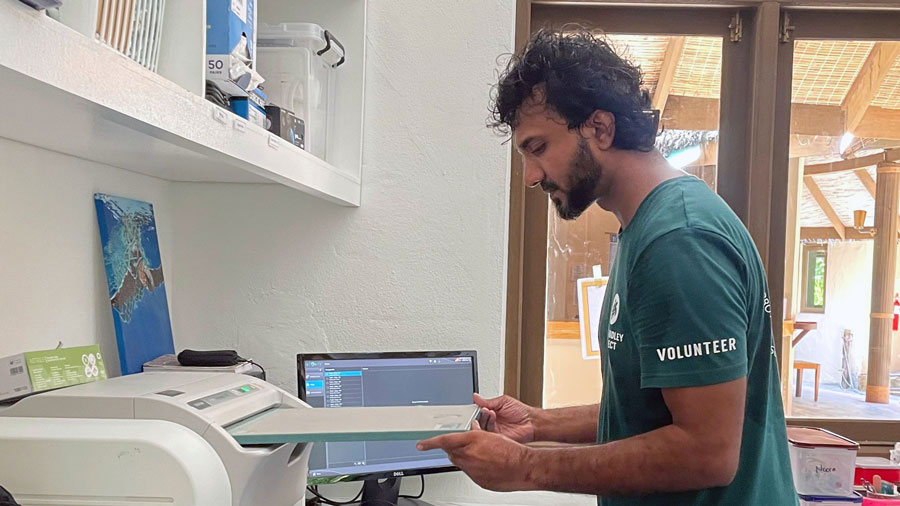
STHI is a very busy facility. Our patient census can vary widely based on many factors, including weather patterns, seasonality, and patient capacity. A typical day will include:
- Rounding on patients with the on-site team.
- Preparing and administering diets.
- Performing routine elective procedures like blood draws, CBCs and clinical chemistry evaluations physical exams, diagnostic imaging, photobiomodulation therapy, acupuncture and wound care.
Once or twice weekly, we hold grand rounds with the on-site team and the Director of Conservation Medicine. This is when we discuss complicated cases and specific aspects of sea turtle medicine.
More complex procedures are often done on a semi-elective basis. These include surgery, centeses, deep wound debridements, endoscopic and contrast studies, and regenerative medicine therapy. Since we function as a 24/7 facility, emergency admissions may occur at any time.
Clinical research is an important component of our mission. We have several projects ongoing at any given time at the Institute, providing ample opportunities to get involved in our research. Indeed, we encourage our visiting veterinarians to actively participate in these efforts.
About the Veterinary Training Programme
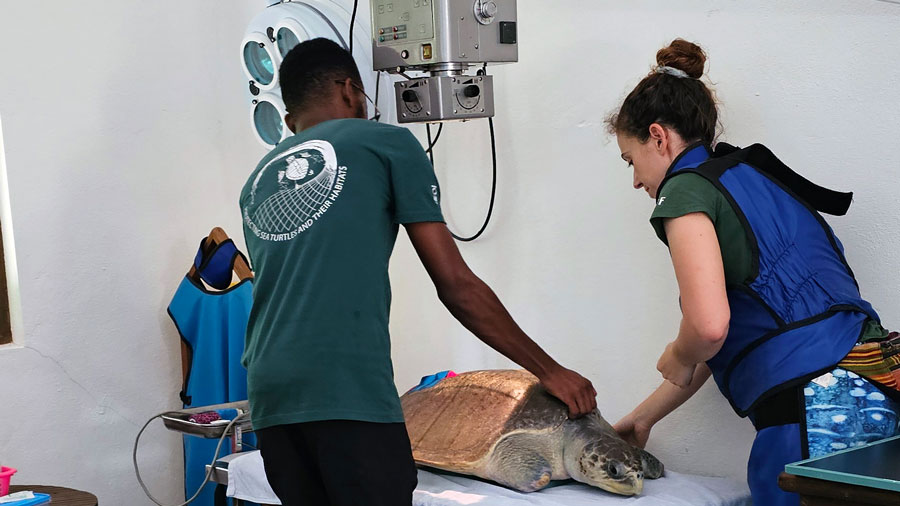
We welcome veterinary surgeons to join us for three weeks of intensive training, combining clinical skill development with didactic instruction all year round.
Our programme’s primary mission is to train clinicians from countries where sea turtle medicine is the primary clinical practice, with a special focus on training veterinary surgeons from our neighboring countries. We are committed to providing this training without charge, acknowledging the challenges associated with specialised veterinary training for clinicians from countries with limited resources.
To provide this resource, we require a modest contribution from veterinary surgeons from other countries to support this training and the operations of the Institute. The contribution for 2027 is £1,900 for three weeks training, excluding return international and domestic flights, visa cost, and travel insurance.
Eligibility for the funded programme is limited to veterinary surgeons who are citizens of, and currently working in, under-resourced regions, as defined by the UNDP’s Human Development Index and, with limited access to specialised veterinary training. Places are offered by invitation following a review of qualifications and experience, to ensure the programme reaches clinicians who will benefit most and can apply their skills within their local contexts.
Testimonials
“I am a veterinarian working in both the private and public sectors in the Maldives, with a strong interest in exotic wildlife medicine. It was a pleasure to take part in the ORP Veterinary Training Programme, where I had the chance to learn a great deal about sea turtles, other marine animals, and wildlife medicine. The training was hands-on, informative, and a lot of fun. I’d definitely recommend it to anyone interested in learning more about turtles and how to work with them.
– Dr Misfah, Maldives
Sea turtle medicine is incredible, but don’t expect them to cooperate. Their favorite position to be is, “anywhere but how you want me to be.”
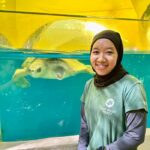
“I’m really grateful for the chance to join the ORP Veterinary Training Programme for three weeks. It was such an amazing learning experience! I got to expand my knowledge of sea turtle medicine and gain lots of hands-on experience with guidance from Dr. Mariana on-site and great lectures from Dr. Max. On top of that, I met some incredible people and made wonderful friends along the way.”
– Dr Naul, Indonesia
How to apply for the Veterinary Training Programme
Applications are now open for ORP’s 2027 Veterinary Training Programme.
Please note that applicants must be qualified veterinary surgeons to be considered. Available dates are listed in the application form.