Most of the seven remaining sea turtle species are threatened with extinction. This matters, because sea turtles are a keystone species which help maintain ocean health by sustaining fish populations, preserving coral reefs, and preventing seagrass meadows from overgrowing and dying. Protecting them means protecting marine habitats that the coastal communities depend on – and by extension, the ocean that our own survival depends on.
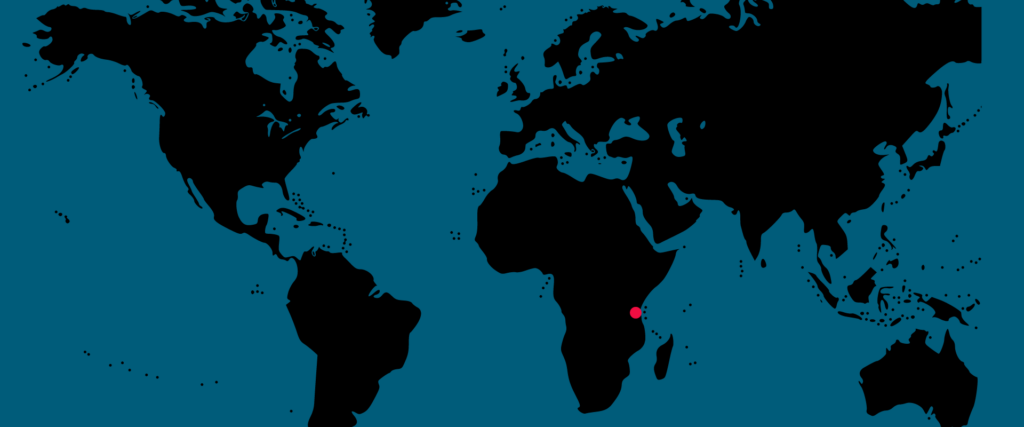
Kenyan waters are home to five species of sea turtles, with greens and hawksbills being the most commonly sighted, both in the water and on beaches where they nest. Despite this, knowledge gaps about sea turtles’ foraging habitats, developmental grounds and migratory routes in the country’s waters often limit our ability to understand the threats they face and design effective conservation strategies.
About ORP – Kenya
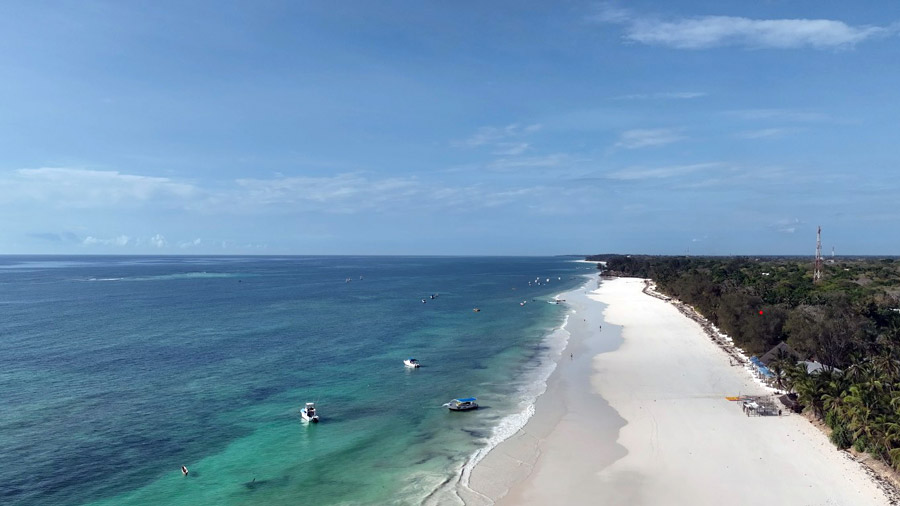
Our journey in Kenya began in 2018 with just one team member and a mission to protect sea turtles and their habitats in the Diani-Chale Marine National Reserve along the south coast of Kenya. What started with simple monitoring dives and small-scale education sessions has since grown into a dedicated team driving impactful long-term research, community-powered conservation, and marine awareness programmes across the Kenyan coast. In 2024, ORP-Kenya became a locally registered NGO (NGO-EPFPJ6), with its headquarters in Diani Beach.
Main activities and objectives
We take a multi-faceted approach to protecting sea turtles and their habitats, rooted in the One Health model, recognising that animal health, ecosystem health, and human wellbeing are deeply connected. This approach allows us to promote healthier oceans, coastal habitats, and better outcomes both for sea turtles and people. In Kenya, we focus on two interconnected areas:
- Monitoring and protection of sea turtles and their habitats
- Educational outreach
Monitoring and protection of sea turtles and their habitats
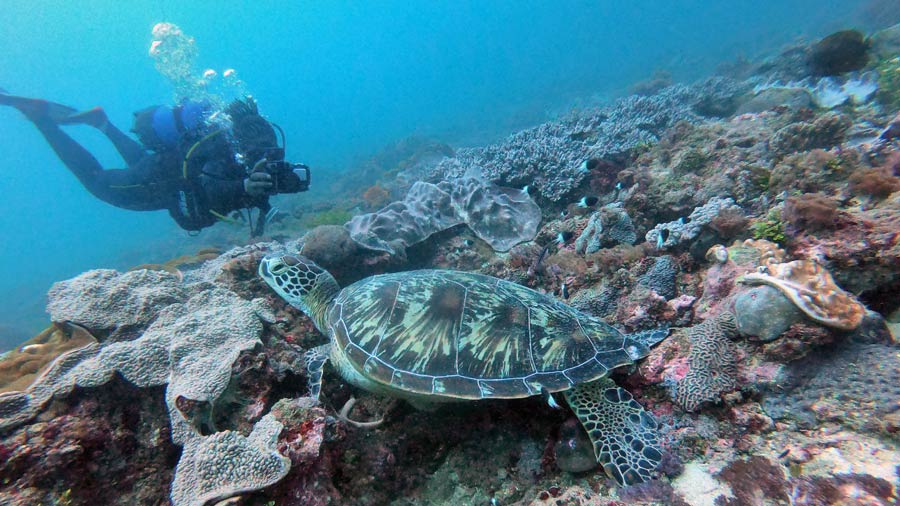
Effective conservation depends on good science. Before we can protect sea turtles, we need to understand where they live, how they move, where they nest and the threats they face. Without this knowledge, we cannot implement effective strategies for protection.
That’s why our work starts with gathering reliable data. Our sea turtle and habitat research spans multiple techniques and locations: we conduct in-water photo-ID and aerial drone surveys in the Diani-Chale Marine National Reserve (DCMNR), alongside nest monitoring, mapping, and protection at Jumba Beach in Kilifi.
These monitoring efforts aim to:
- Understand the size, structure and connectivity of Kenya’s sea turtle populations
- Contribute towards the knowledge of sea turtle reproductive biology and foraging ecology
- Map high-priority sea turtle conservation areas, including nesting and foraging sites
- Identify key threats to sea turtles
- Protect nesting sea turtles and active nests
- Develop targeted research and conservation strategies
In the long-term, we aim to expand into additional marine protected areas, strengthen nationwide conservation through community partnerships, and ensure Kenya remains a safe haven for sea turtles. Our findings are shared with both local, national, and international audiences.
Our sea turtle monitoring achievements and impacts
Identified over 800 green turtles and nearly 100 hawksbill turtles in the DCMNR
Identified key sea turtle foraging areas in the reserve
Detected Fibropapillomatosis (FP) disease in around 13% of identified green turtles in the DCMNR
Published and contributed to several research papers, including:
- Using Photo-ID to document and monitor the prevalence of fibropapilloma tumours in a foraging aggregation of green turtles
- Photo Identification as a Tool to Study Sea Turtle Populations in Kenyan Marine Protected Areas.
- Drone-Based Assessment of Sea Turtle Habitat Utilization in the Diani-Chale National Marine Reserve, Kenya
Expanded monitoring into seagrass habitats to better understand habitat use by sea turtles
Educational outreach
Lasting change is only possible when local communities are part of the solution. That’s why we work alongside fishing communities, schools, students and local organisations to build knowledge, leadership and long-term stewardship of Kenya’s marine environment.
Our activities include:
- Collaboration with fishing communities through the Balozi wa Kasa (Sea Turtle Ambassador) Programme
- Trials of fisher-led bycatch mitigation strategies
- Internships for graduates in related fields
- Student attachment programmes with partner universities
- Educational festivals and community events
- Workshops for schools, youth groups, and other stakeholders
- Citizen science projects with local dive centres
Our goal is to work alongside coastal communities to strengthen knowledge of sea turtle distribution, threats, and habitats, while also strengthening locally led efforts to protect sea turtles. Together, we are developing community-driven conservation models that can be adapted and scaled across Kenya’s coastline.
Our educational outreach achievements and impact
Launched the Balozi wa Kasa (Sea Turtle Ambassador) Programme in collaboration with 11 fishing communities in Kwale county
Certified 129 local leaders as Sea Turtle Ambassadors, encouraging them to champion the cause of sea turtle conservation in their communities
Supported Sea Turtle Ambassadors in building peer-led sea turtle awareness, documenting sea turtle bycatch and testing mitigation solutions
Equipped 7 interns with practical skills and experience through our internship programme, with two subsequently securing full-time employment at ORP
Mentored 10 students through our attachment programme
Worked with local partners to bring together hundreds of children, community members, and stakeholders for the annual Diani Sea Turtle Festival
Collaborators & funders
Our work in Kenya is made possible through strong collaborations with partners such as Conservation Education Society (CES), Bahari Hai (BH), IFAW, Shimoni Turtle Watch (STW), Biosciences Research Centre (PUBReC) at Pwani University, Kenyatta University, and the Technical University of Mombasa to facilitate our activities with invaluable support from Kenya Wildlife Service, Wildlife Research and Training Institute, Kwale County Fisheries, and The County Executive Committee.
Long-term allies Diving the Crab, continue to play a key role, alongside newer partners and funders including Ninmah Trust, Pacsafe, SEE Turtles, Animal Saviours, Ocean Culture Life, Msambweni Beach House, Oceanic Society, and SWOT.
We are deeply grateful to our individual donors, sea turtle adopters, and citizen scientists whose contributions are instrumental to our success. Your support is the backbone of our success.