
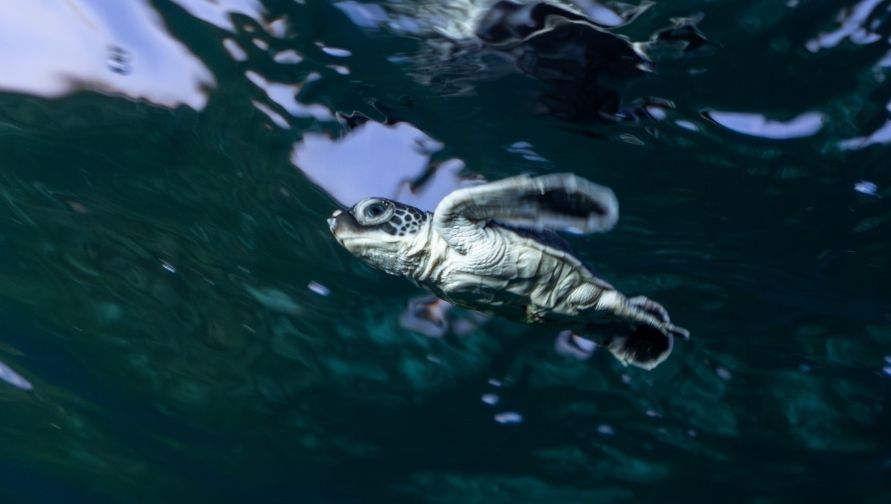
Tiny sea turtle hatchlings run down the beach, closely watched by hungry crabs and seabirds. Once they’ve made their splash into the ocean, they have to dodge large fish and sharks, equally eager for a hatchling-sized snack.
Their only defence is to swim far from the near-shore predators as quickly as possible, and perhaps find floating sargassum to find shelter in. Survival is tough, and mortality is high!
During this vulnerable stage, which lasts for a few years until the hatchlings grow into juveniles, these small sea turtles have to navigate many threats in order to survive.
Therefore, to improve their chances of survival during these critical early years, a conservation technique called “headstarting” was developed. First implemented officially in Florida in the 1950s, the practice has since been met with varied perceptions from the sea turtle conservation community.
What is headstarting?
The term headstarting refers to the practice of keeping hatchlings in captivity for a prolonged time, until they reach a larger body-size before being released into the wild (Philott, 2023).
By raising hatchlings in a controlled, predator-free environment, headstarting aims to increase hatchlings’ overall chances of survival, with the expectation of more sea turtles surviving into adulthood.
Holding hatchlings back vs headstarting: What is the difference?
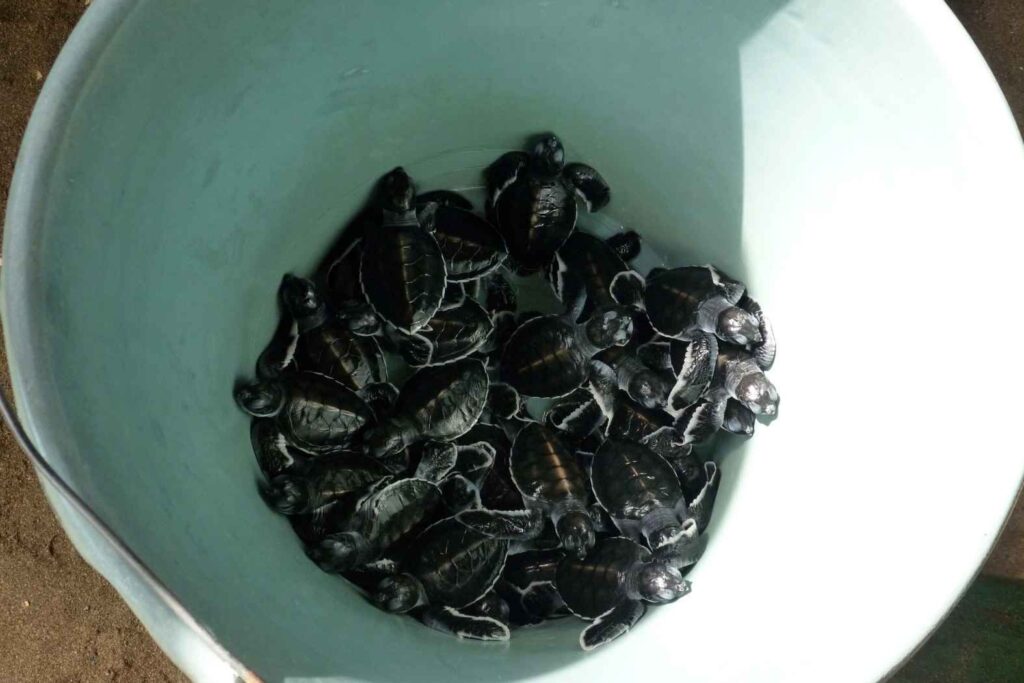
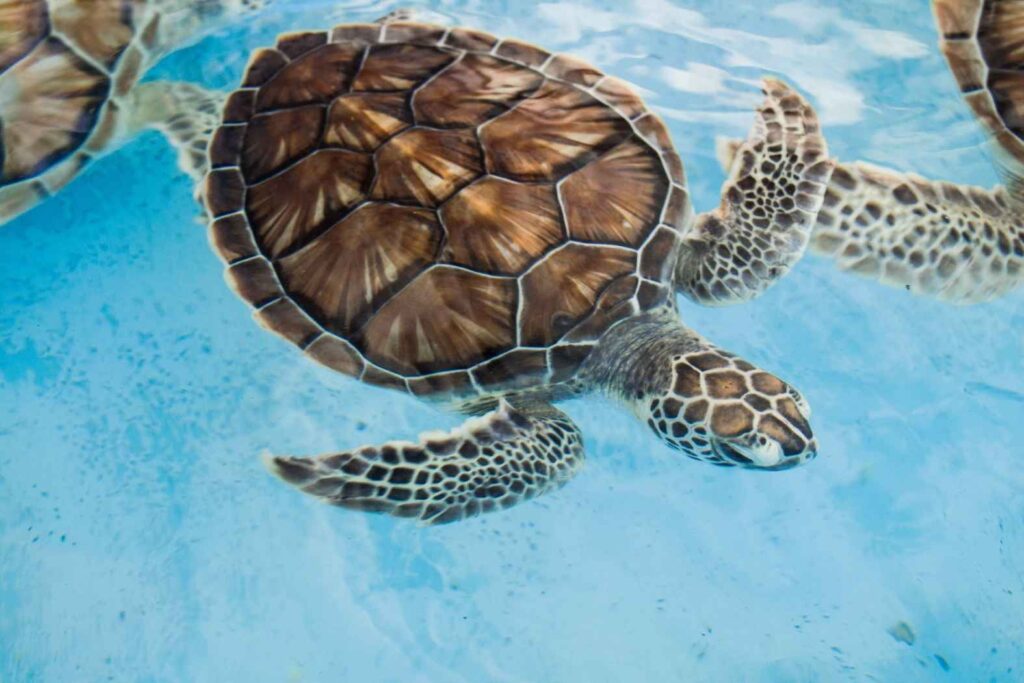
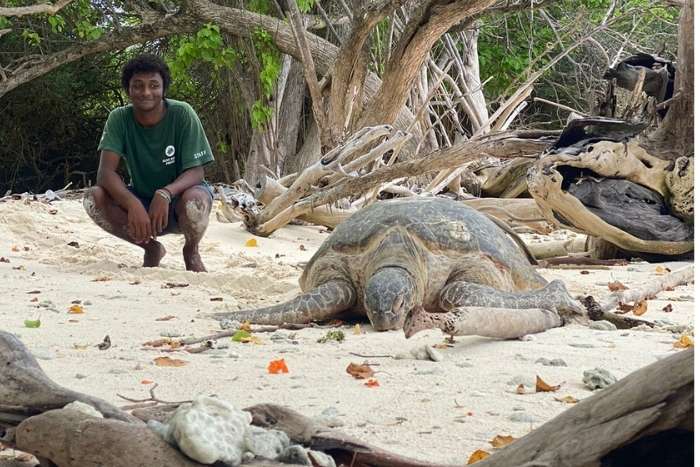
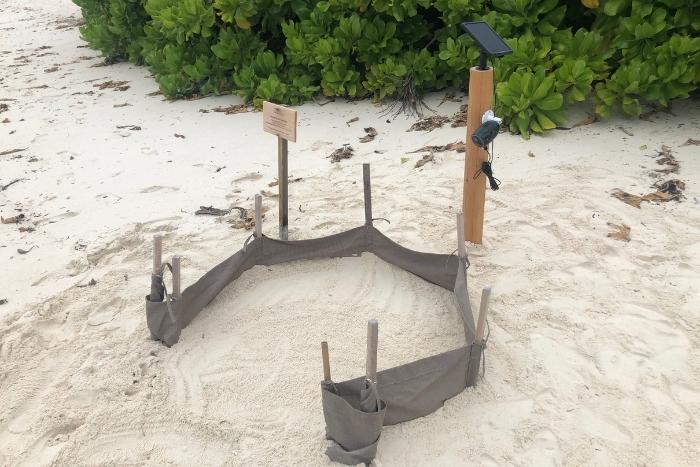
The conservation technique of headstarting (Picture 2) is not to be confused with holding or retaining hatchlings (Picture 1), either in water or in dry conditions on land, with the purpose of releasing them at convenient times within hours or days after hatching.
Think of photos or videos you may have seen on social media – people holding hatchlings in buckets or small containers, smiles all around, and photo-worthy moments of holding a scurrying little sea turtle before putting it in the water.
Unfortunately, this practice, seen across tourist hotspots in coastal nations, is more detrimental than beneficial to hatchlings, affecting them at a critical stage of their journey, when they must swim from the beach into the open ocean.
For this perilous journey, hatchlings use energy reserves from their egg yolk, which they absorb right before hatching. This limited energy reserve is vital for hatchlings to enter a state known as ‘ swimming frenzy’, an almost non-stop swimming phase lasting 24-48 hours or more depending on the species. During this time, the hatchlings are purely focused on swimming away from shallow waters and the associated predators as quickly as possible, and into the open ocean.
When hatchlings are held back, they use up this reserve quickly by frantically swimming or walking about in their contained space, leaving them slow and vulnerable to predators once they enter the water hours or days later.
The early days of headstarting: Why, when and where?
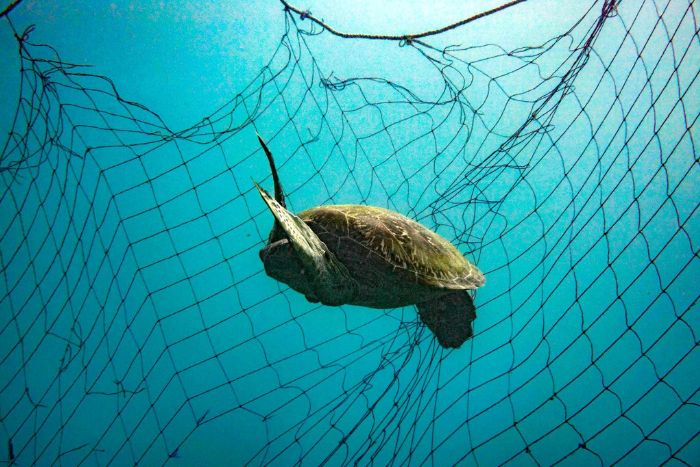
By the mid-20th century, sea turtle populations in several parts of the world had become severely depleted as a result of harvesting of their eggs and meat, accidental capture in fishing gear, and habitat destruction.
As the exact mechanisms that might lead to successful population recovery were not well understood at the time, conservationists around the globe tried different management strategies.
One such strategy was headstarting, which aimed to boost the survival rates of sea turtles during what is considered the most vulnerable time of their lives.
Take for example, the programmes established in Mexico, the USA and Cayman Islands in the 1960-70s. These initiatives focused on headstarting Critically Endangered Kemp’s ridleys, as well as local green turtle populations that were facing collapse. The programmes reported success, as the number of nests laid naturally increased over the following decades, and researchers found that some of the females returning to nest had originally been raised in captivity.
However, the exact impact of these headstarting programmes is still debated, as oftentimes, headstarting was implemented alongside other conservation measures, such as protection of nesting beaches, as well as improvements to fishing gear leading to a reduction of sea turtle bycatch mortalities.
The criticism raised against headstarting
While headstarting is most definitely practiced with good intentions, it is still perceived as problematic by a large part of the sea turtle conservation community. But why is that?
1. Headstarting has a negative impact on sea turtles’ natural behaviour
Studies have found indication that headstarted sea turtles show uncoordinated swimming behaviour, lacking clear direction as naturally migrating sea turtles would. When sea turtles are released after months or a few years in captivity, they show no clear directional movement away from the beach, as hatchlings under normal circumstances would show. Instead, their migrations were compared to a bit of “aimless wandering”. Other aspects of behavioural and biological changes in captive reared vs wild sea turtles, for example diving or food finding behaviour, have not been studied extensively to date.
2. Sea turtle husbandry is challenging and risky
Keeping wild and highly migratory animals such as sea turtles in confined spaces comes with very specific challenges. Sea turtles in captivity – especially when many individuals are kept in a small water volume or tank – run the risk of bites resulting from frequent interactions. Not to mention, the water quality needs to be very closely monitored, since diseases can spread easier when sea turtles are in an enclosed environment.
3. Headstarting is not cost effective or efficient
Raising and caring for sea turtles in captivity is expensive. It requires personnel as well as extensive resources, such as housing facilities, controlled feeding, maintenance, and veterinary care. This requires large amounts of investments, which is difficult to sustain in many locations, while proven long-term benefits of headstarting remain highly debated.
For example, the Cayman Island Turtle Conservation and Education Centre reports having released over 37,000 individual green turtles since their opening in the 1960s. In 2020, 350 nests were recorded on its associated nesting beach. Genetic studies suggested that around 90% of the females responsible for these nests came from the Centre’s captive-reared population. However, this would amount to fewer than 100 nesting females, despite decades of captive breeding and rearing efforts.
4. Headstarting redirects resources from more effective conservation measures
As headstarting programmes are cost intensive, that funding is no longer available for other conservation projects which might have bigger impacts, such as protection of natural nesting beaches or implementing the use of sea turtle friendly fishing gear.
5. It does not address the underlying threats and focuses on the wrong life stage
While headstarting may provide a tool to increase survival rates during a certain lifestage, it does not address critical underlying threats that sea turtles face, such as interactions with fisheries through bycatch or ghost nets, illegal and unsustainable harvest and habitat destruction.
Headstarting also does not address the loss of adult breeding sea turtles, as from a population perspective, older animals that are capable of reproducing and producing offspring are more valuable for the conservation of that species. Sea turtles, in their later subadult and adult stages of lives typically face lower rates of natural mortality, such as predator-threat. However, It is these very individuals that are impacted quite severely by man-made threats such as bycatch. Since sea turtles take many years to reach adulthood, when an adult sea turtle is lost, it can take decades for a young sea turtle to grow up and replace it. In some cases, populations may not have enough time to recover from these losses.
For those looking to dive deeper into the debate around headstarting, watch this informative Plenary Session 2 – Headstarting Revisited: Effectiveness, Ethics, and Evidence from The 44th International Sea Turtle Symposium 2026.
Is there a future for headstarting?
Because of the critique listed in the section above, the headstarting method has not been uniformly adopted and implemented globally for sea turtle conservation. Some countries, like the Maldives, have banned the technique altogether.
Individual projects, however, still practice headstarting, aiming to address existing concerns by further investigation of questions around the method, for example regarding behaviour change of headstarted sea turtles or the long-term impact of each programme.
Given the significant investment required, along with existing gaps in evidence surrounding its long-term effectiveness, we at Olive Ridley Project have therefore chosen not to invest in headstarting.
Instead our conservation approach is are focused on threat identification and mitigation across all life stages of sea turtles. On nesting beaches, we conduct low-interference nest monitoring and protection, and in the ocean we study populations through Photo-ID, satellite tagging and genetic sampling. By working with fishing and coastal communities, we address some of the most significant threats to sea turtles such as fisheries interactions and habitat loss.
As for headstarting, continued long-term monitoring will be critical for understanding its outcomes and dictating the role it may have in future sea turtle conservation efforts.