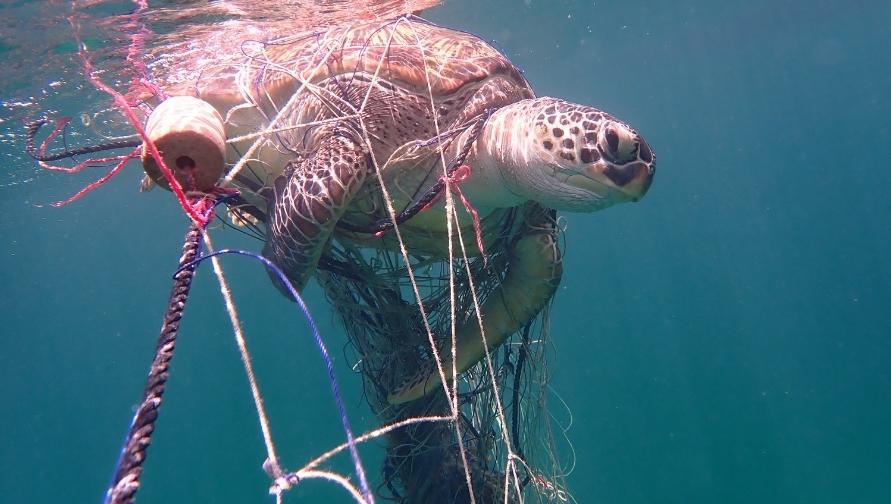
Along Kenya’s south coast, five species of sea turtles share their waters with hundreds of artisanal (small-scale fishing) vessels. For generations, these fishers have co-existed with sea turtles, but as fishing pressure increases, so does a critical threat – the accidental capture of sea turtles in fishing nets, also known as bycatch.
Bycatch, or, the unintentional capture of species not targeted by fishermen, is one of the most serious global threats sea turtles face. When sea turtles become trapped in active nets, they can suffer injuries, with many even running the risk of drowning since once entangled, they are unable to reach the surface to breathe. In high-stress situations like entanglement, they can quickly run out of their oxygen reserve, and without being able to come up for air, they can even die.
When we think of bycatch, it is easy to assume that industrial fishing fleets are the main cause. But research shows that small-scale fisheries can cause just as much sea turtle mortality as large commercial operations.
Did you know? Artisanal fisheries are small-scale, traditional fisheries carried out for subsistence or commercial purposes, where the owner is directly involved in daily operations and uses relatively little capital.
Kenya’s artisanal fisheries
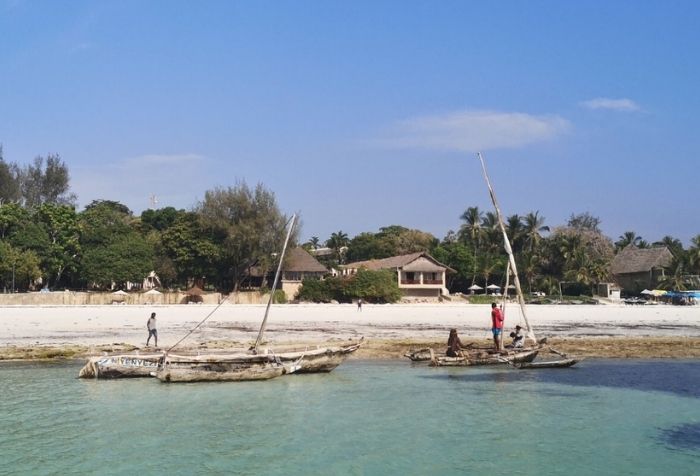
As per Kenya’s governmental data, the country’s marine fishery is overwhelmingly artisanal. In 2022, the country recorded 37,494 MT of caught fish, and artisanal fishers were responsible for 35,596 MT of that total – a majority share!
The artisanal sector therefore is not only the backbone of coastal livelihoods, employing thousands of fishers, but it is also essential for local food security and economy. This is why balancing livelihoods and conservation action is important.
Since small-scale fishers operate mainly in nearshore areas, their activities tend to overlap directly with sea turtle habitats – and monitoring these interactions is extremely challenging. Here’s why:
- Most small fishing vessels are under 12 metres long and cannot carry many observers
- Fishing effort is widely spread along the coast, making interviews with fishers or landing site surveys difficult
- Resources for monitoring are limited
Therefore, finding practical ways to assess, monitor, and reduce sea turtle bycatch in small-scale fisheries becomes a high conservation priority.
ORP-Kenya’s community-led approach
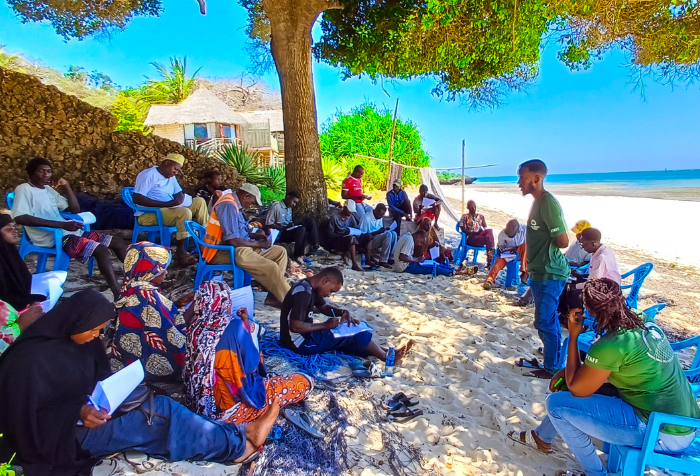
Since 2022, the ORP-Kenya team has been working with fishing communities along the coast to inspire conservation action on the ground. Since fishers while working at sea often observe and come in contact with sea turtles, we decided to nurture this long-standing connection, by providing fishers with formal and practical knowledge of how to manage their interactions with these marine reptiles safely.
By offering educational sessions in sea turtle ecology, biology and rescue, and supporting interested individuals to become ‘Balozi Wa Kasa‘ or Sea Turtle Ambassadors (STAs) within their communities, we began to inspire not only interest but also a sense of responsibility amongst individuals.
From our interactions with fishers, including STAs, we found that bycatch was a common occurrence. But because it is illegal to capture sea turtles in Kenya, most fishers are afraid to report these incidents.
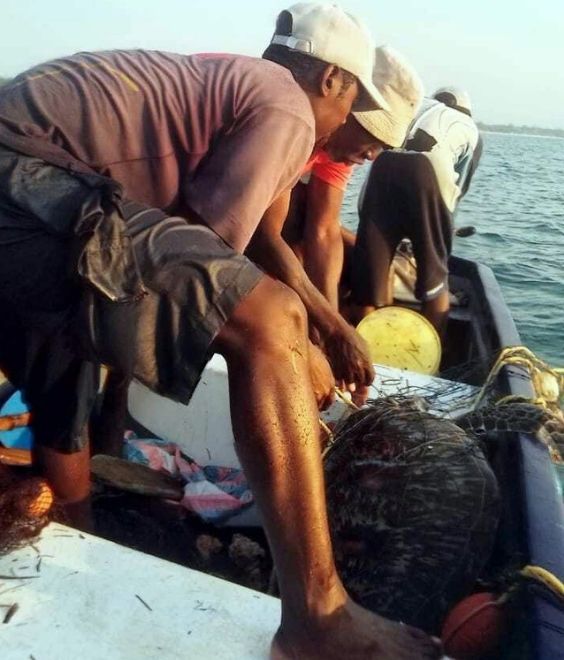
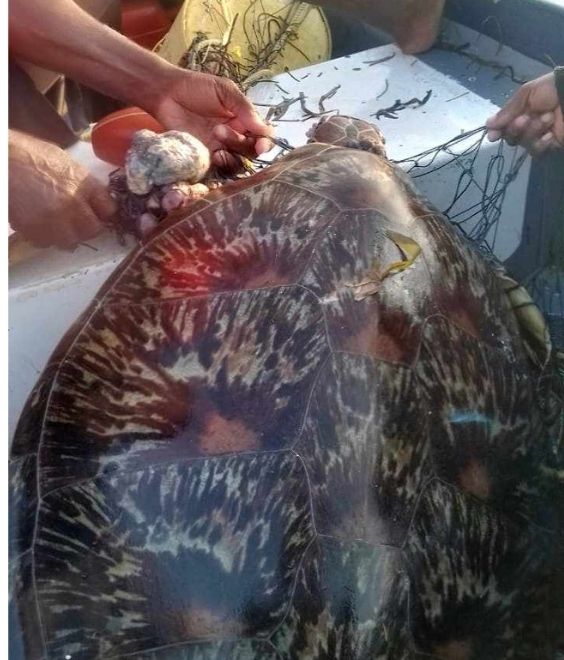
Fishers also tend to see bycatch as an economic issue. If a sea turtle becomes severely entangled, fishers often have to cut parts of the net to free the animal. Repairing these nets requires time and money – costs that weigh heavily on communities already facing financial challenges. Many fishers know that modifying their gear could help reduce bycatch, but such changes are often too expensive. Nets are also shared among groups, so no single fisher can make decisions.
Despite these challenges, many fishers expressed genuine interest in solutions that protect sea turtles without harming their livelihoods. This sincere interest is what shaped ORP- Kenya’s current bycatch mitigation study.
Bycatch mitigation study: testing lights on nets
Studies from around the world have shown that adding LED lights to gillnets can reduce sea turtle bycatch by up to 40%, without affecting the commercial fish catch. Numbers aside, the science behind it is truly fascinating. Sea turtles can detect short wavelengths of light, including UV light, while many commercially important fish species have natural filters in their eyes that reduce their sensitivity to these wavelengths.
In simpler words, sea turtles can spot illuminated nets with ease, while the fish cannot.
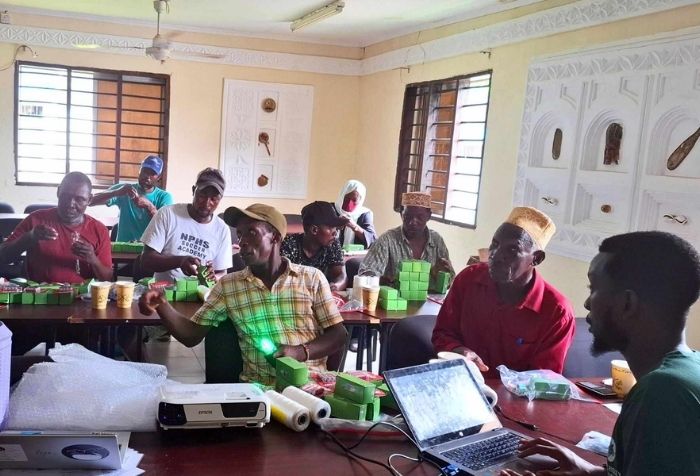
Encouraged by these findings, ORP-Kenya launched a two-year LED powered bycatch mitigation study in June 2025, supported by funding from Animal Saviours and a micro-grant from SWOT. The study is being carried out with permissions and support from Kenyan authorities, including the County Executive Committee, Kwale County Fisheries, Kenya Wildlife Service and the Wildlife Research and Training Institute.
For the study, our team is working with nine gillnet fishers, three each from the Mwakamba, Mwaepe, and Chale-Jeza Beach Management Units (BMUs). The fishers attach LED lights to their bottom set gillnets, and collect data each month, recording both sea turtle bycatch and commercial catch, when the lights are on (illuminated) and when the lights are off (control). This data is then logged, digitised and analysed by our team consistently.
Since bottom-set gillnets are left in the water for longer periods, they make consistent data collection easier.
Did you know?
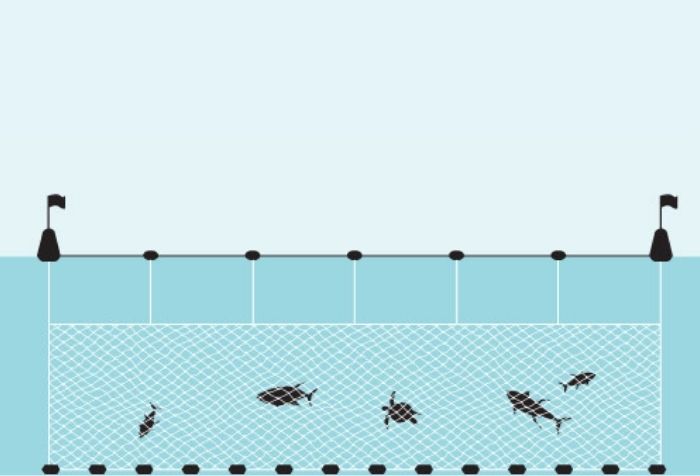
Gillnets are popular in artisanal fisheries because they are simple to use, cost-effective, and catch a wide range of fish.
But their near invisibility underwater also makes them one of the most dangerous gears for sea turtles – once caught, the sea turtle can drown if its unable to reach the surface to breathe.
How the study works
The study uses a simple process that fits easily into participating fishers’ normal routines:
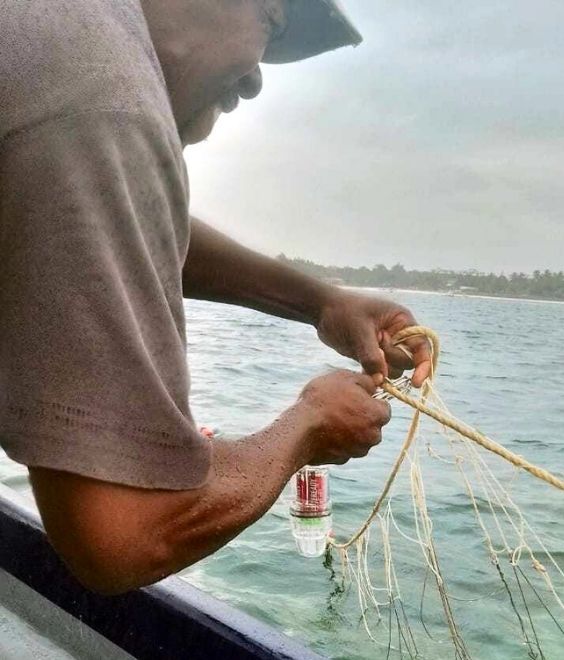
- Fishers set their bottom-set gillnets at their usual locations.
- Nets remain in the water for at least 24 hours.
- When checking the nets, fishers record: commercial catch and bycatch – including sea turtles, in a data log sheet
- The same steps are repeated with LED-illuminated nets and non-illuminated nets.
By comparing catch data from both nets over time, the study will show whether LED lights truly reduce sea turtle bycatch without affecting the fishers’ commercial catch.
A fisher-led effort
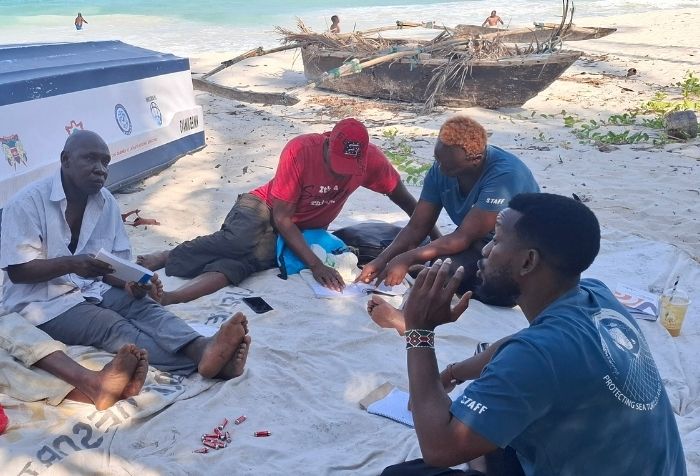
One of the study’s most important features is that it is not a top-down initiative, but rather a partnership. Fishers not only helped design the trial methods with ORP, they also actively choose their fishing sites, and collect all the data themselves. This ensures that the results reflect real-world fishing conditions, with the fishers observing the effects of the intervention directly.
The fishers who have taken the lead on the project, are curious, invested, and motivated to protect the ecosystems they depend on. With the LED lights showing positive change in the first year of the study – reduced bycatch of sea turtles and a slight increase in commercial catch – we can already see that the participating fishers advocate for wider adoption of the intervention through our established Sea Turtle Ambassador network.
As this two-year-long study continues, our team, local partners, and the fishers are uniting for a thriving ocean, where fishing traditions continue and sea turtles thrive.
If you would like to support ORP Kenya’s work to protect sea turtles and their habitats, click here.