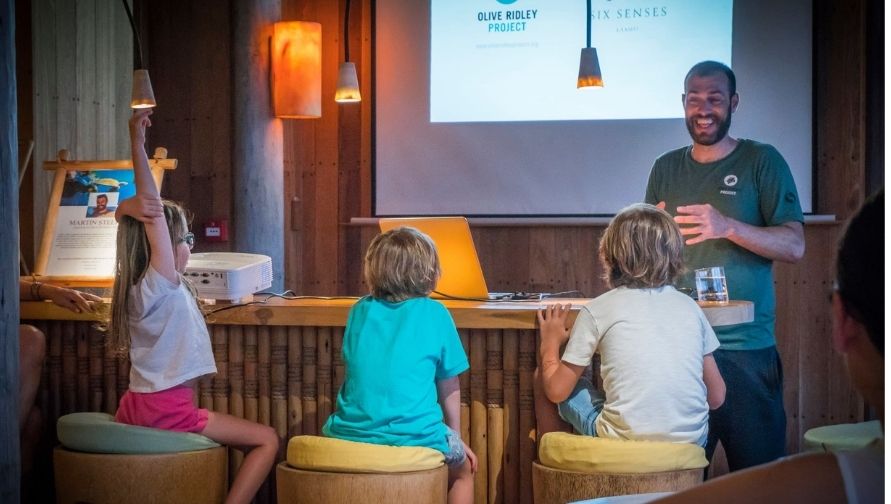
When Martin first began working in marine conservation over two decades ago, he could hardly have predicted where that journey would lead him. What began as the work of a young marine biologist driven by a fascination for the ocean and marine reptiles, eventually grew into the founding of an international sea turtle charity – which now operates across five locations and advances protection of sea turtles and their habitats.
More than twenty years on, that body of work has now been recognised by one of the world’s most respected marine scientific institutions.
We are proud to share that our Founder and CEO, Dr Martin Stelfox, has been elected as a Fellow of the Marine Biological Association – one of the world’s oldest and most respected marine scientific institutions.
Founded in 1884, and incorporated by Royal Charter in 2013, the Marine Biological Association is one of the world’s longest-standing scientific societies dedicated to advancing our understanding of the oceans and the life they support. Fellowship of the Association is awarded to individuals who have made distinguished and sustained contributions to the field of marine science, making this recognition a fitting reflection of Martin’s commitment to marine conservation.
But beyond the celebration, Martin’s journey reflects broader lessons about what conservation looks like in practice – how the field has evolved, where science and community intersect, and what it really takes to protect marine ecosystems in a changing world.
The following questions explores these themes more deeply, offering Martin’s reflections on the challenges and shifts that continue to define marine conservation today.
Q Over the past two decades, how have you seen marine conservation evolve, and what shifts have been most encouraging to witness?
During my time in marine conservation I have seen a shift in how we communicate conservation and the audience we are able to reach. Twenty years ago, conservation projects were restricted to localised awareness or a smaller cohort of people knew about a particular project through word of mouth. Today, the power of digital platforms and social media can project conservation messaging around the world, helping more people understand environmental issues and mobilising support in ways that simply were not possible twenty years ago. I would say in general, social media is a powerful tool for conservation, however, the flip side is that it can also be used to greenwash and inflate the real impact on the ground. More than ever, you have to be very careful, as anyone with a social media account can post anything they want without any governance or transparency.
Q Despite growing awareness of ocean conservation, what do you think remain the biggest barriers to protecting marine ecosystems successfully?
Relationships between stakeholders.
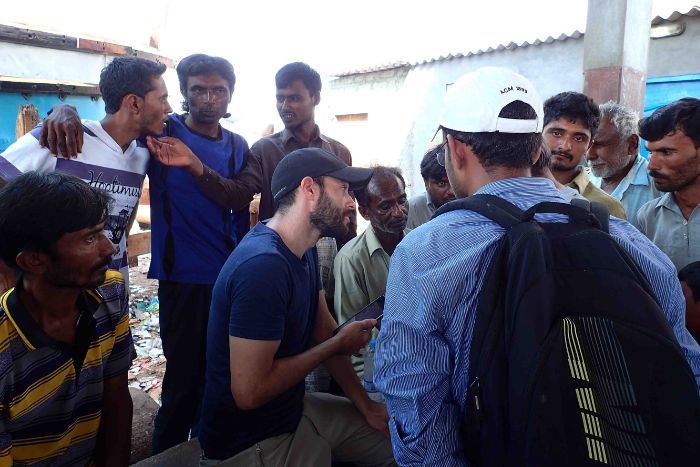
There continues to be a disconnect between stakeholders when it comes to conservation and creating real change. Even in 2026, many conservation groups, academics, alliances, NGOs, governments, and policymakers are still working relatively independently or in isolation from one another and from local communities.
There are of course great examples of collaborative efforts, but local communities are too often treated as an afterthought rather than placed at the forefront of conservation planning. Political instability further complicates things, as effective marine conservation frequently requires collaboration across jurisdictions, yet these cross-border efforts are usually overlooked.
Q Conservation often requires making decisions with incomplete scientific data. How then do you act decisively in situations where scientific certainty doesn’t exist or is evolving?
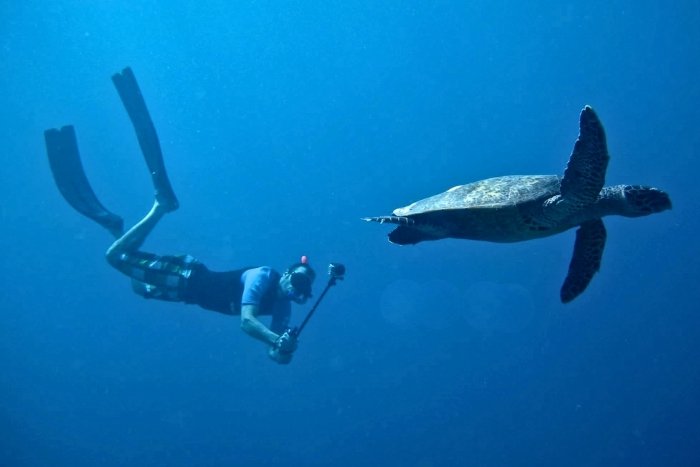
As a scientist, I believe it is always important to question every scientific result, no matter how convincing it may appear. Good scientific practice recognises that findings are never absolute and that new evidence can overturn what we accept as true today.
This is the mindset I bring to every conservation decision: we work with what we know so far, however limited that may be and act on the best information available rather than doing nothing. We can always collect more data and deepen our understanding of a system, but time is not on our side. In my view, taking action and making decisions is more important than waiting for science to provide what we imagine will be a perfectly definitive answer.
Q Conservation discussions have begun to emphasise community-led approaches, but in practice there can still be major imbalances in who defines priorities and controls resources. How do you think the sector needs to evolve in addressing these power dynamics?
A community‑led approach must sit at the heart of every decision. In practice, this means that from the very outset of Marine Protected Area (MPA) design, policy reform, or National Action Plans, relevant communities need to be involved and, crucially, treated as equal partners in shaping decisions. Communities cannot be invited at the end of a discussion or roundtable once major choices have already been made. If we are serious about shifting power toward community‑led conservation, people must feel genuinely empowered which requires meaningful involvement right from the start.
Q Is there a deeply held belief about conservation that you had early in your career, which your experience has now forced you to rethink?
I used to assume that everyone wanted the same thing. Early in my career, I was naive about how strongly politics can overshadow conservation. I believed that if someone worked in conservation or claimed to, they were in it for the right reasons. While that is true for many, there are also actors with very different agendas, and it’s important to recognise that from the outset. Taking the time to understand each stakeholder and the role they play in conservation is essential, because not everyone is starting from the same place or working toward the same goals.
Q Sea turtles are among the most widely recognised marine species, yet they continue to face significant threats. What do you think people often misunderstand about protecting these species?
I think the migratory nature of sea turtles, and their ability to move freely across political boundaries, is often misunderstood or overlooked. Effective sea turtle conservation demands collaboration among many stakeholders, frequently requiring multiple governments to work together. To the general public, especially those who don’t know much about sea turtles, successful rescue or rehabilitation can seem like the whole story. In reality, the real challenge lies in what happens next, and how these animals are protected as they travel through different habitats and jurisdictions.
Q Working in conservation means constantly confronting environmental decline, species loss, and slow progress. How do you sustain long-term commitment in a field where change can take decades and setbacks are inevitable?
For me, I have a deep passion for the animals I protect, a real connection built from many encounters with them in the wild. From an early age, my love for reptiles only grew, and it’s my hope that the next generation can witness what I’ve been fortunate enough to see, and that keeps my fire burning. That passion is what drives me to keep pushing every day and to fight for what I believe is the right thing to do.
Q When you think about the next generation of conservationists inheriting this work, what do you hope they do differently from those who came before them?
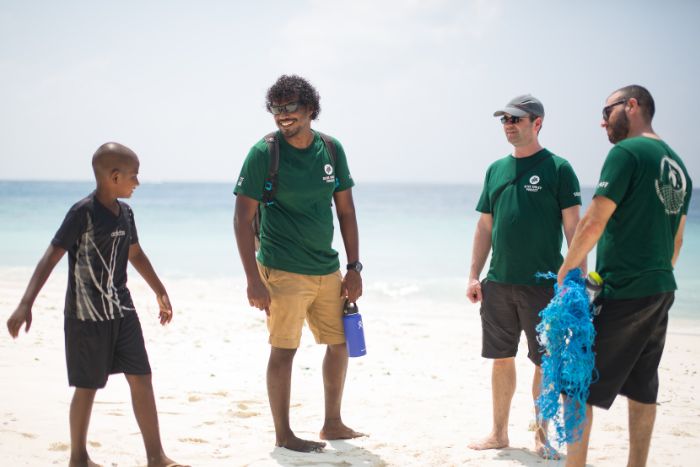
I hope they become more open to collaborating with one another and with local communities. While important progress is already being made in this area, I hope the next generation takes it even further, so that the communities who depend on the ocean feel safe, secure, and empowered to lead discussions about the future of our oceans.