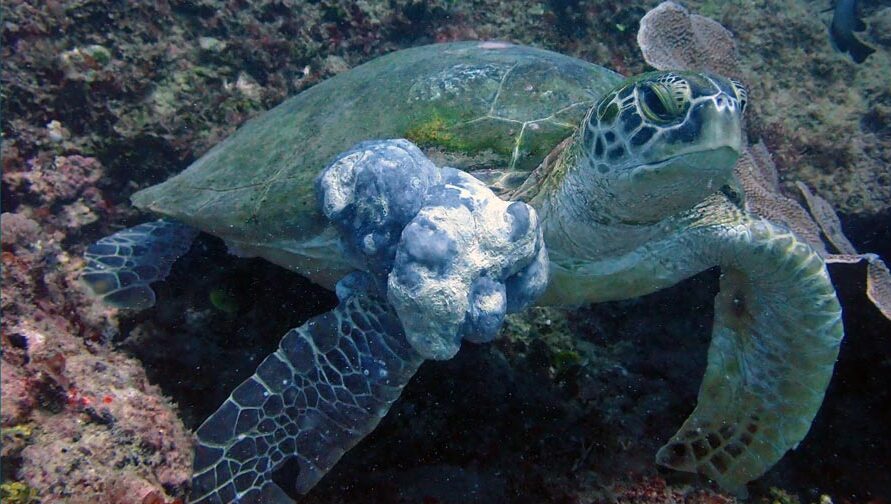
Sea turtles face many threats, but there’s a lesser known disease that is affecting these marine reptiles around the world – a disease known as fibropapillomatosis (FP).
FP is a condition that causes tumour-like growths on a sea turtle’s body, affecting all tissues and organs such as skin, the shell, and even internal structures. This disease mainly affects juvenile green turtles, but has been found in other species too, and threatens the health of sea turtle populations globally.
What causes fibropapillomatosis in sea turtles? The virus-environment connection
The science behind FP’s cause is a little complex. While the disease is caused by a virus – alpha-chelonid herpesvirus 5 (ChHV5)– scientists believe that environmental factors may contribute to virus replication and acceleration of tumour growth.
For example, environmental triggers such as runoff from urban and agricultural areas pollute oceans by introducing contaminants into coastal waters. These chemicals could then diminish a sea turtle’s immune system, giving the virus an opportunity to replicate.
This is why FP is complex and difficult to understand. While the virus that causes the disease is not new, the conditions that allow the virus to cause disease in sea turtles are.
How to recognise FP: clinical signs and effects
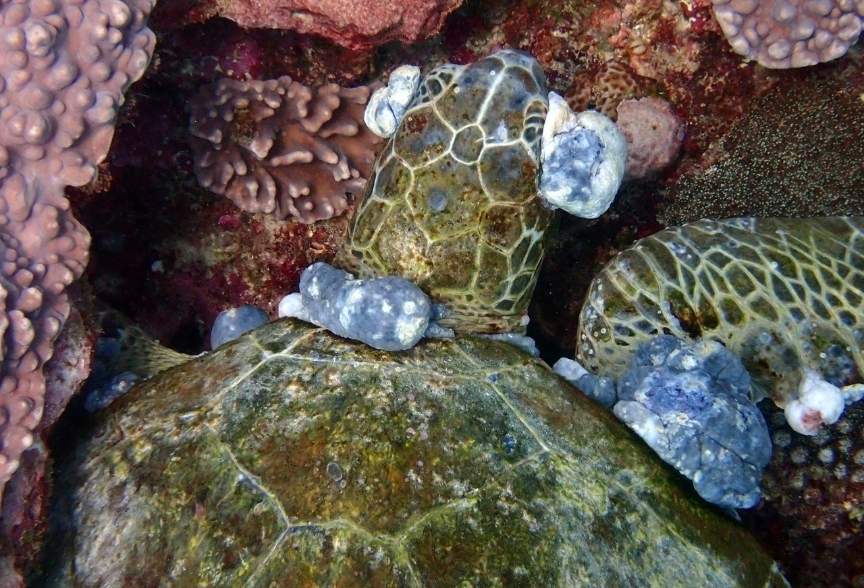
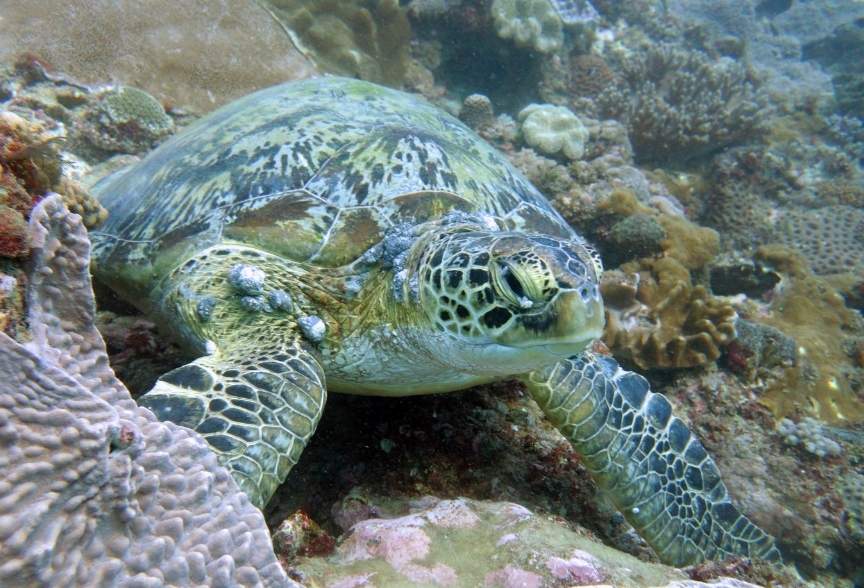
External tumours: The most visible sign of FP is the presence of cauliflower-like tumours (also known as papillomas) on a sea turtle’s skin, that vary greatly in size and appearance.
Common locations:
1) around the eyes: may obstruct vision
2) in the mouth: may prevent feeding,
3) on the flippers: affects swimming
Internal tumours: Although not visible without medical imaging examinations, internal tumours can develop on tissues surrounding organs such as the lungs, kidneys, and gastrointestinal tract. This can lead to organ dysfunction and is often the ultimate cause of death for severely affected turtles.
The combined effect of both external and internal tumour growth can compromise a sea turtle’s ability to survive in the wild.
Why is FP dangerous to sea turtle populations?
This disease can pose long-term danger, especially for endangered sea turtle populations. Because sea turtles grow and mature slowly, sometimes taking decades to start reproducing, a disease that kills off even a few mature adults or prevents younger sea turtles from reaching breeding age can be harmful.
This loss can skew population growth, especially if the death rate overtakes the incredibly slow birth rate. The species then cannot recover, accelerating their decline and making them even more vulnerable to extinction.
Where in the world are sea turtles most affected by FP disease?
FP can be observed across the globe, with the highest infection rates consistently showing up in heavily populated coastal areas: from Florida and Hawaii in the US, all the way to Eastern Brazil, the reefs of the Caribbean and even down in Australia.
In Kenya, we documented FP in 75 green turtles of the Diani-Chale Marine National Reserve between July 2018 and December 2022. The affected population amounted to about 12% of the reserve’s documented green turtles.
This research was important because it:
- confirmed FP in a previously understudied region
- used photo-identification (Photo-ID) – a non-invasive, cost-effective way to monitor sea turtles
- documented both the progression and regression of tumours in individuals
The study’s findings are invaluable, offering a glimmer of hope for recovery in some individuals. This approach also mirrors other successful long-term field studies in places like Hawaii and the Florida Keys, where data collected has helped scientists better understand the disease and how environmental conditions affect different populations.
Case study of FP regression in Kenya:
Purcell (G584), was first spotted as a juvenile green turtle in November 2021, just 45 cm long. Purcell would often linger around a big coral head near our descent line at Milele. Spotting her became a tradition, like being welcomed by an old friend at the start of every dive.
Over the years, we watched Purcell grow into a calm and almost friendly sea turtle, reaching an impressive 80 cm as per our most recent sighting. But along with her growth came a challenge none of us were prepared for.
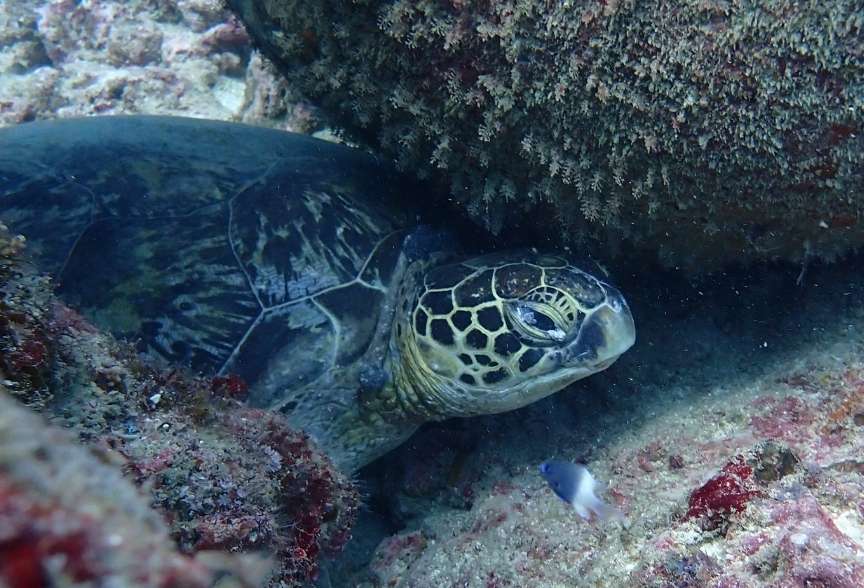
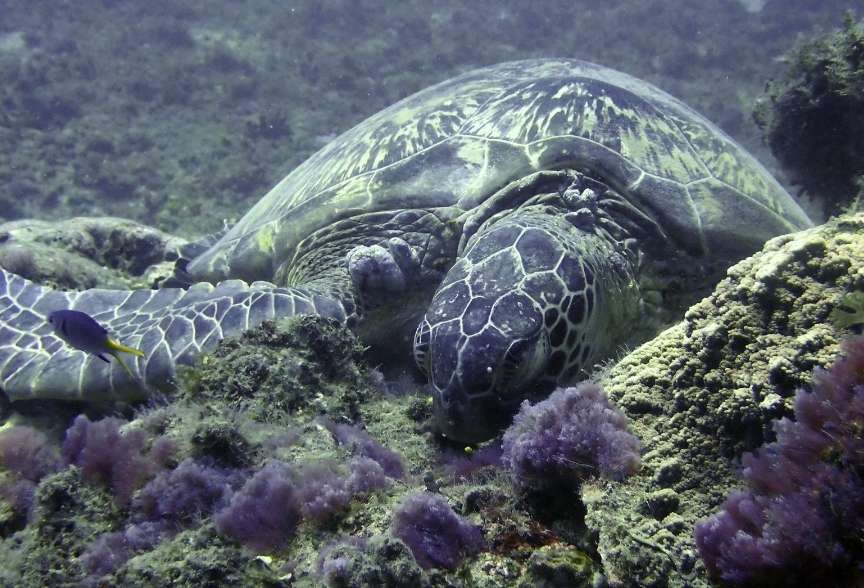
The onset of the disease: In early 2022, we began to suspect that Purcell was showing signs of FP, since we observed small tumours beginning to form around Purcell’s eyes. By late 2023, our fears were confirmed. Tumours appeared around both of Purcell’s eyes. Throughout 2024, they spread to her neck and flippers. Every new dive with Purcell was bittersweet, while we were relieved to spot our old friend, we were also heartbroken to see the tumours grow larger and more obstructive.
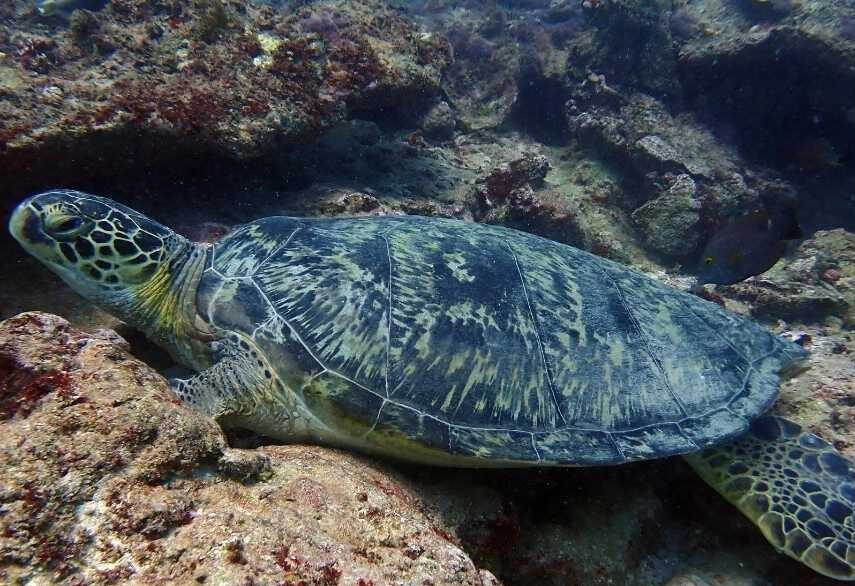
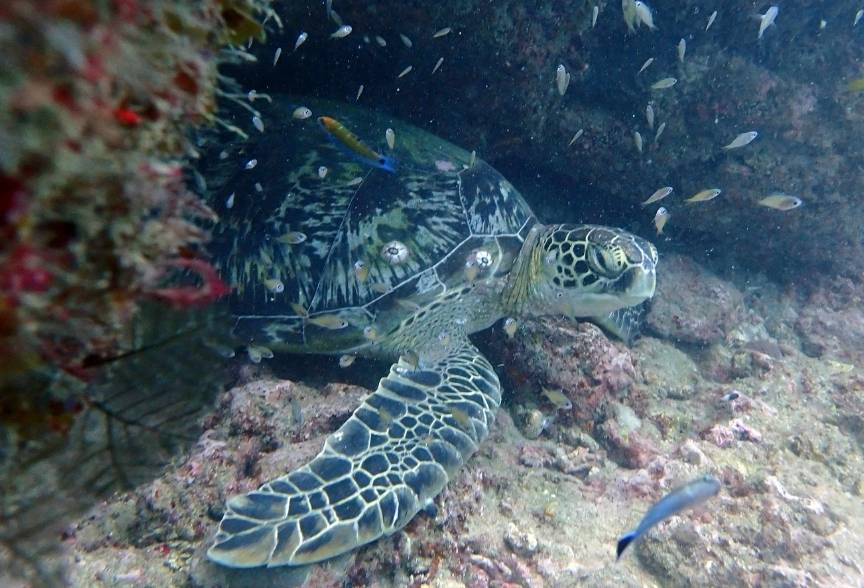
A surprising turn: Then, in August 2025, something extraordinary happened. We spotted Purcell again, and the tumours were gone. What we witnessed was nothing short of miraculous! Tumour regression in sea turtles is known to occur, and seeing it firsthand in one of our most beloved residents filled us with hope and relief. Purcell was swimming with ease again, with her characteristic calm grace.
As of December 2025, Purcell appears to remain tumour free.
Is FP curable?
For sea turtles with severe FP, with no observed tumour regression, surgery is currently the only treatment. Veterinary surgeons often use a CO₂ laser to remove tumours. This method is precise and less invasive when compared to conventional surgical techniques.
Cryosurgery, which freezes the tissue, can remove smaller tumours. However, these clinical treatments are intensive and require bigger resources. They also just address the symptoms, and not the underlying viral or environmental causes. This highlights the need for more clinical research into systemic treatments, such as antiviral therapies or immunotherapies.
What are the gaps in addressing FP?
Scientists are still working to understand:
- why and when the virus replicates in tissue
- how the disease spreads
- the long-term effects on wild populations,
- how to develop non-surgical intervention therapies
Addressing FP requires collaboration between professionals from many disciplines including field researchers, veterinary surgeons, geneticists, and environmental scientists.
How are conservationists fighting FP?
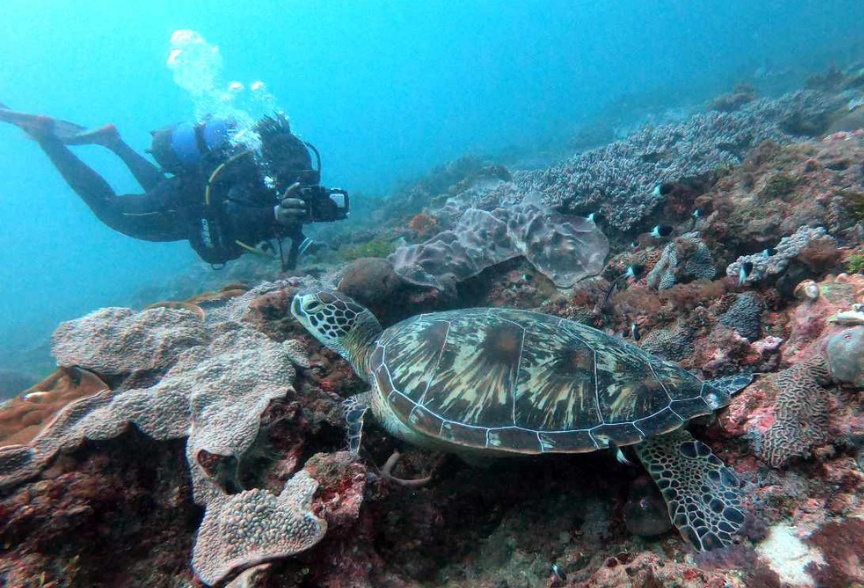
- Monitoring wild populations: Photo-ID programmes, like our’s in Kenya, or those in Florida, and Hawaii, help track disease prevalence and tumour changes over time.
- Genetics and viral research: At Pwani University in Kenya, Dr. Sammy Wambua’s team is studying the gene expression of this disease with samples obtained from live and stranded sea turtles, in order to understand the genetic susceptibilities of the disease. Institutions across the US and Brazil are carrying out similar work to understand the underlying genetic and immunological contributors of tumour development.
- One Health approach: Researchers are conducting viral and genetic studies to understand the connection between the herpesvirus, environmental factors, and sea turtle health. This holistic approach acknowledges that ecosystem, human and animal health are deeply linked.
- Citizen science: Additionally, citizen science programmes enable the public – such as tourists, divers and coastal communities – to report sightings of sea turtles suspected with FP. This helps expand monitoring efforts across wider areas.
- Habitat protection: Protecting coastal habitats like beaches, reefs, and seagrass, as well as cleaning up degraded areas, is crucial for reducing pollution and other environmental stressors – which are believed to contribute to virus replication in susceptible sea turtles.
What can you do to help?
The fight against FP is ongoing, but the observation of tumour regression in some sea turtles gives us hope. By taking action, you can be part of the solution too:
- Reduce coastal pollution: Make conscious choices to reduce your waste and avoid contributing to marine pollution. You can also report different types of pollution to your local authorities, from waste and run-off to light and noise pollution, all of which affect sea turtles in coastal waters.
- Participate in citizen science: If you see a sea turtle, share your photos with local conservation groups. Your sighting can help track individual sea turtles and disease cases.
- Support conservation groups: Your donations for organisations focused on marine sea turtle health can fund critical research, monitoring, and clinical efforts.
- Spread awareness: Share information about FP with your friends, family, and social networks to help raise awareness about this issue.