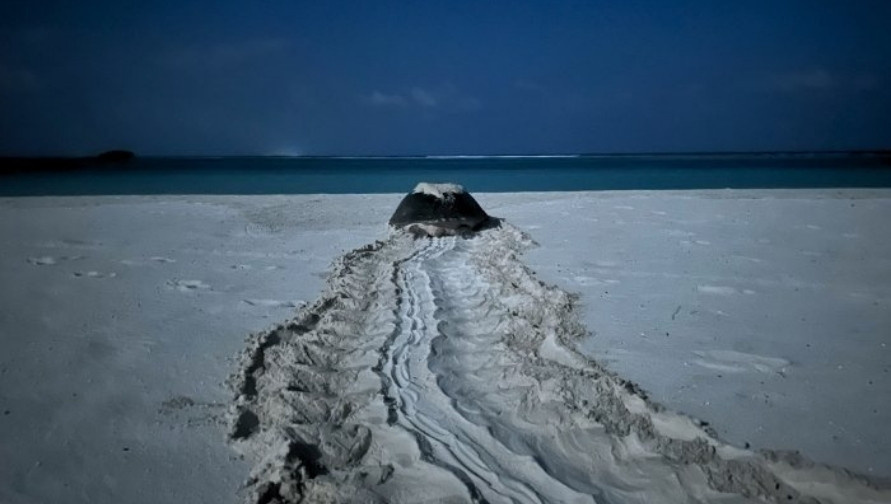
The paradise-like sandy beaches spread across nearly 1200 islands of the Maldivian archipelago are more than just picture-perfect landscapes. For sea turtles, these shores are crucial habitats – places where life first takes form for these ancient reptiles!
For generations, these animals have returned to the Maldivian coastline with consistency, guided by instinct to lay their eggs in the very places where their own journeys once began.
But today, affected by human pressures, the story of Maldives’ nesting sea turtles is changing.
A new study by ORP, published in January 2026, traces how sea turtle nesting across the Maldives has changed over time – highlighting both troubling declines and unexpected new developments.
A scattered history of sea turtle nesting in the Maldives
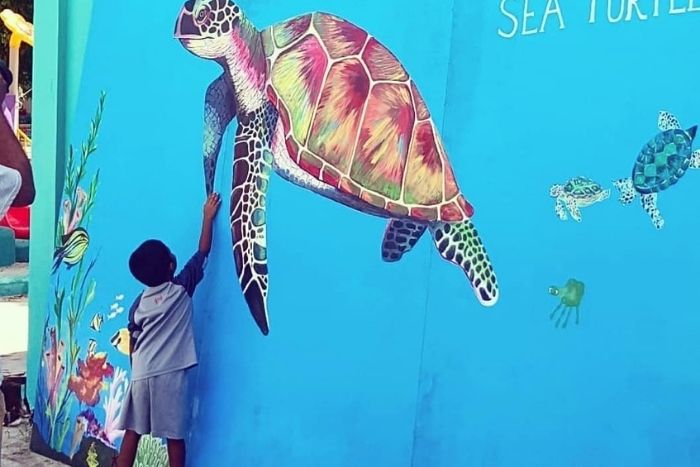
Sea turtles have long been part of the Maldives’ natural identity, so much so that the 1,000 Maldivian Rufiyaa banknote features both a sea turtle and a whale shark.
This connection is also reflected in on-ground governance, where key nesting sites across the country are recognised and protected through both government action and local stewardship.
Yet, understanding sea turtle nesting across such a vast and scattered island nation has not been as straightforward.
The first nationwide study, conducted in 1983 by Frazier, Salas and Hassan Didi, offered an early understanding of sea turtle nesting. It identified potential nesting islands across Ari, Baa, Haa, Laamu and Meemu atolls, but also highlighted just how limited and fragmented the data was. The most detailed information came from a single site: Laamu Gaadhoo, one of the Maldives’ most important nesting beaches. While the study recorded up to 240 nests per year in Laamu, anecdotal accounts suggest historical numbers may have exceeded 1,000 annually.
More than three decades later, a 2016 study by the Maldives Marine Research Institute launched the country’s first national citizen science programme, collecting nesting and foraging data from five atolls and four key hotspots.
The findings showed that most nests were from green turtles, while hawksbill nesting appeared rare – an early warning sign that nest numbers, particularly for hawksbills, may have declined.
What remained clear, however, was the need for long-term monitoring of sea turtle nesting in the Maldives.
Counting nests in a country of many islands
Amongst the numerous islands spread across the Maldives, almost any beach could serve as nesting habitat for sea turtles. This makes consistent, large-scale monitoring – which is common in other conservation programmes – extremely difficult and cost intensive in the Maldives. To overcome this, we adopted a multi-method approach to survey nesting across the country.
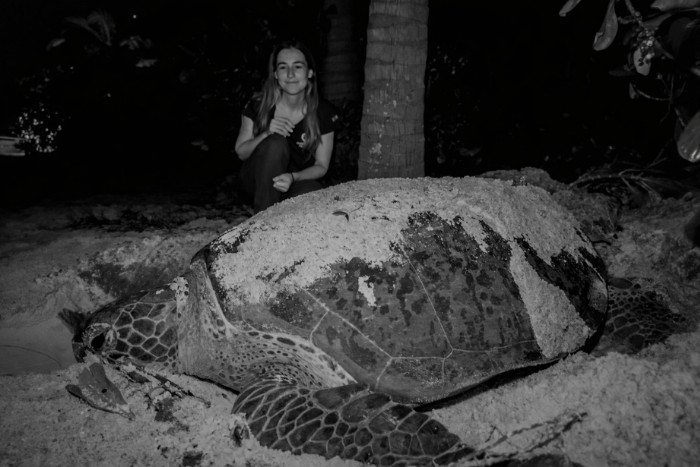
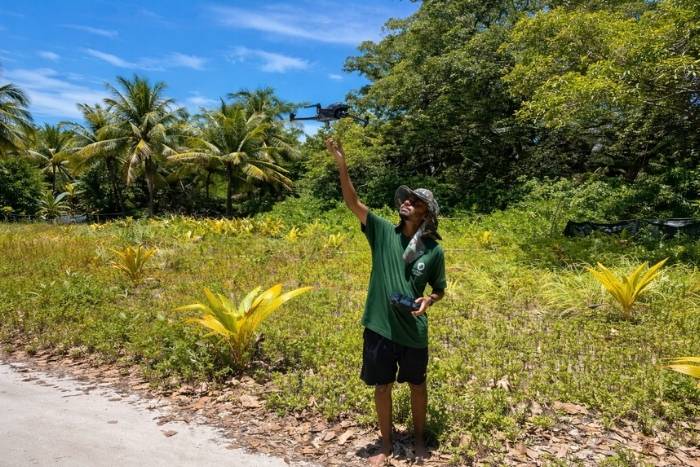
While our in-field researchers, supported by resort partners, diligently collected data on-ground, valuable contributions from citizen scientists reporting nesting activity from across the archipelago bolstered our efforts. These combined efforts – an example of the power of citizen science – generated data spanning 18 of the Maldives’ 20 atolls.
In 2023, we launched the Sea Turtle Ranger Programme in Laamu Atoll, and introduced drones into the monitoring process. This enabled surveys across multiple islands, increasing the frequency of observations, without the need for long-distance travel.
These efforts over the last seven years represent one of the most extensive multi-year datasets on sea turtle nesting in the Maldives.
What did we find?
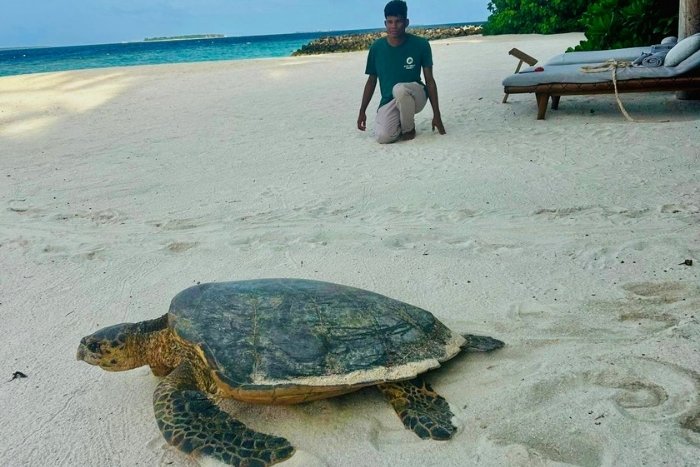
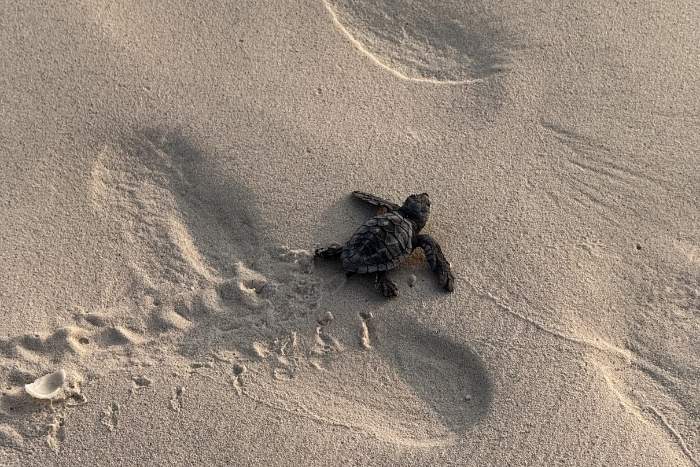
- Some worrying news: One of the most striking findings of this study is the sharp decline in hawksbill sea turtle nesting in the Maldives. Although hawksbills are still the most commonly seen turtles in the water, we recorded fewer than 50 confirmed nests over seven years.
This is a dramatic drop from historical estimates in the 1980s and 1990s, which suggested hundreds to thousands of nests each year. This decline has also been recognised in the Maldives’ 2022 National Red List, which classified hawksbills as Critically Endangered in the country.
Since hawksbill nesting appears to be concentrated in the northern atolls, these areas are particularly important for conservation priorities. - Some good news: A new species seems to have discovered the Maldives as a nesting ground – the olive ridley. Our study documented 14 olive ridley nests, marking the first official record of this species nesting in the country. Unlike the large mass nesting events seen in India (arribada), all nesting observed in the Maldives was by solitary nesters, a behaviour also known for this species. This may suggest that, as olive ridley populations recover in parts of the Indian Ocean, some females are beginning to explore and use new nesting areas like the Maldives.
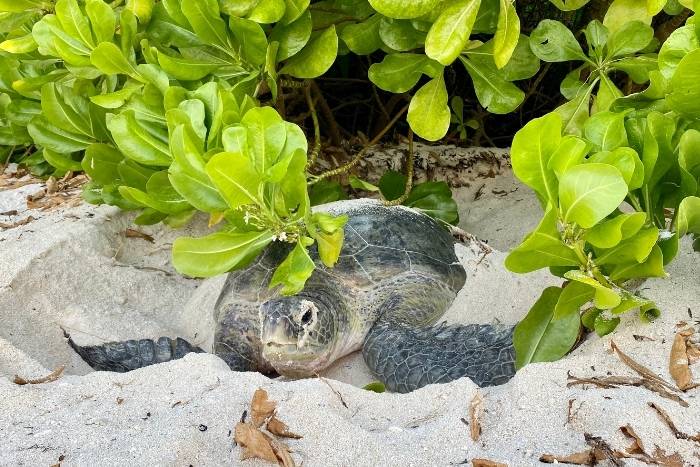
- The consistent nesters: Green sea turtles make up the majority of nesting activity in the Maldives. While this species has recovered globally, the Maldivian population remains endangered, making continued nesting especially important.
We recorded greens nesting across 16 atolls, with particularly important nesting beaches identified in Baa, Laamu, Lhaviyani and Noonu atolls. While green turtle nesting peaks between June and August, it can occur at any time of year. This means that there is no single defined nesting season in the Maldives, so observers may be lucky enough to spot a nesting female anytime throughout the year.
During the study, we identified 44 individual nesting females, five of which returned to nest in more than one season. Since nesting is physically demanding, female sea turtles need time to recover and rebuild energy reserves. For green turtles, this typically takes around three years, something our observations also confirmed.
What about threats to sea turtle nests?
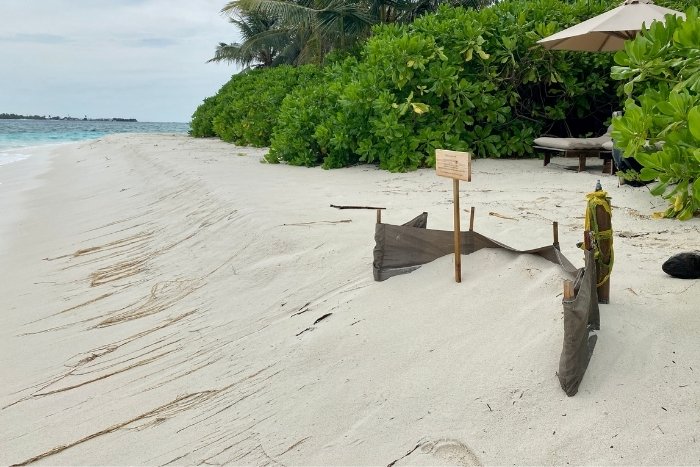
Our study identified flooding and coastal erosion as the main cause of sea turtle nest failure in the Maldives. In this low-lying island nation, when waves frequently wash over nests, eggs can become waterlogged. Developing embryos, deprived of oxygen in the soaked sand, may even face death – unless interventions like nest relocations follow.
Other threats that we recorded include, illegal take of sea turtle eggs, along with their natural predation (although to a lesser degree), mainly by ghost crabs, which can further reduce the chances of hatchlings surviving.
What does this mean for sea turtle conservation?
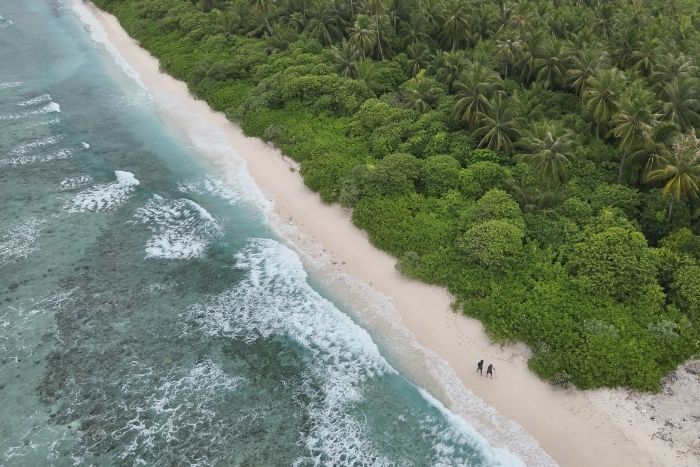
Our findings make one thing clear – that sea turtle conservation in the Maldives cannot be limited to a handful of beaches. With nesting spread across the country’s many islands, protecting sea turtles requires a broader approach, one that considers the fate of sea turtles and their habitats while planning for coastal development, so that ecological and human needs can be balanced for a sustainable future.
And while Maldives’ dispersed geography makes monitoring every island a challenge, focused efforts at key nesting beaches, such as L. Gadhoo, can provide valuable insight into overall population trends even with limited resources.
What comes next?
Although we have learned a great deal about sea turtle nesting in the Maldives, we are continuing our nest monitoring efforts to understand how trends evolve over time. In this effort, we are grateful for the support of citizen scientists new and old, as well as partners across the country.
We are also looking forward to expanding our nest monitoring program in the future to include more information about environmental factors such as weather and temperature, which affect embryo development and hatchling survival. As a start here, we are aiming to collect local weather information, as well as sand temperature from nesting beaches with special data loggers.
So stay connected with our work through social media, our website, or our newsletter, and follow these discoveries as they unfold. If you would like to be a part of this effort to protect Maldives’ sea turtles, you can share your sea turtle nesting sightings from across the Maldives at: seaturtleid@oliveridleyproject.org
You can take a look at our published study here.