Primary causes of sea turtle rescue cases in the Maldives
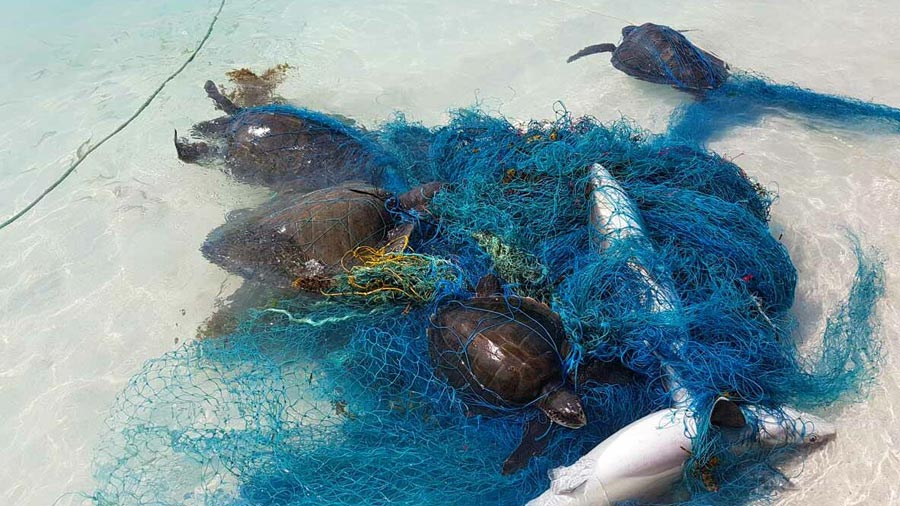
Sea turtles face numerous threats across the world, from habitat loss to human-related activities. In the Maldives, two of the most significant threats are entanglement in marine debris and the degradation of marine ecosystems. Together, these factors impact more than 90% of our patient population. They are also the primary causes of two serious clinical conditions: Buoyancy Syndrome and Entanglement Disorder.
Buoyancy Syndrome
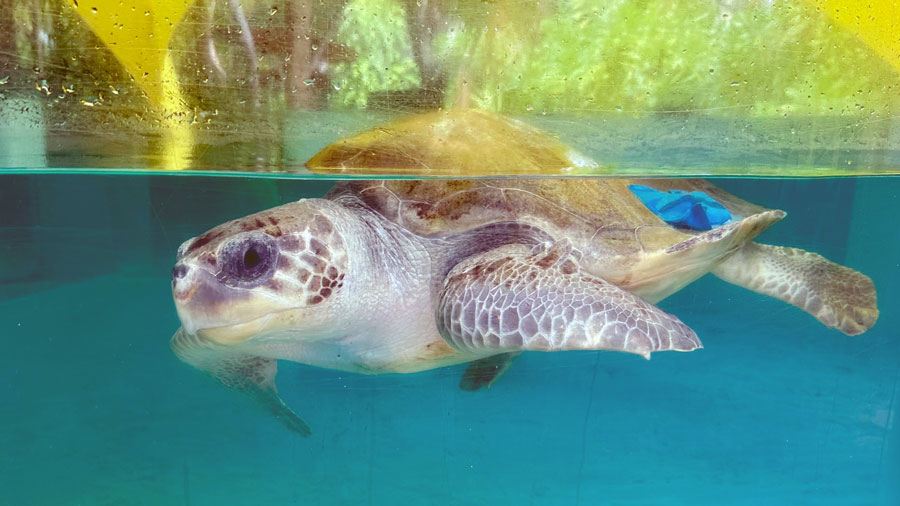
Buoyancy Syndrome is a complex medical condition that causes sea turtles to float abnormally at the surface due to the build-up of gas in the body cavity. The gas accumulation typically originates from the lungs, gastrointestinal tract, or both. This prevents them from diving, surfacing, foraging, resting, and mating – all essential to their survival. If left untreated, it can lead to serious disease or even death.
To treat this devastating syndrome, our veterinary team has developed a world-leading, multimodal programme combining several advanced therapies. These include Targeted External Weight Therapy (TEWT), Kinetic Buoy Training (KBT), and specialised surgeries like coelomocentesis, enterocentesis, and autologous blood pneumopleurodesis. Each treatment is tailored to the individual patient and has proven highly effective.
Entanglement Disorder
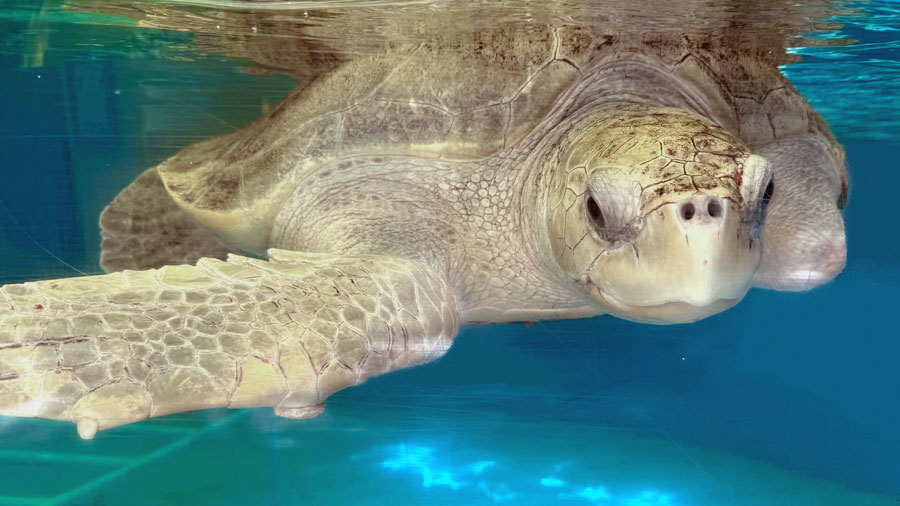
Entanglement Disorder is a complicated injury and disease process that begins when a sea turtle becomes entangled in marine debris. This can severely restrict movement, causing deep trauma to the flippers, shell, and neck. In many cases it can also lead to the loss of limbs – or even death.
To treat this condition, our veterinary team has developed an innovative, holistic limb-salvaging protocol. This includes a unique combination of regenerative, molecular-based, and integrative medical therapies such as:
- Platelet-rich plasma (PRP): PRP is a regenerative medicine technique adapted from human medicine, where the processed components (platelets) of the patient’s own blood are carefully injected at sites of injury to stimulate healing.
- Class IV laser therapy (photobiomodulation): a non-invasive technique that uses various wavelengths of light to reduce pain and speed healing, particularly for soft tissue injuries, bone disease, and post-operative care.
- Traditional Eastern therapies: including acupuncture, alongside topical treatments such as Manuka honey.
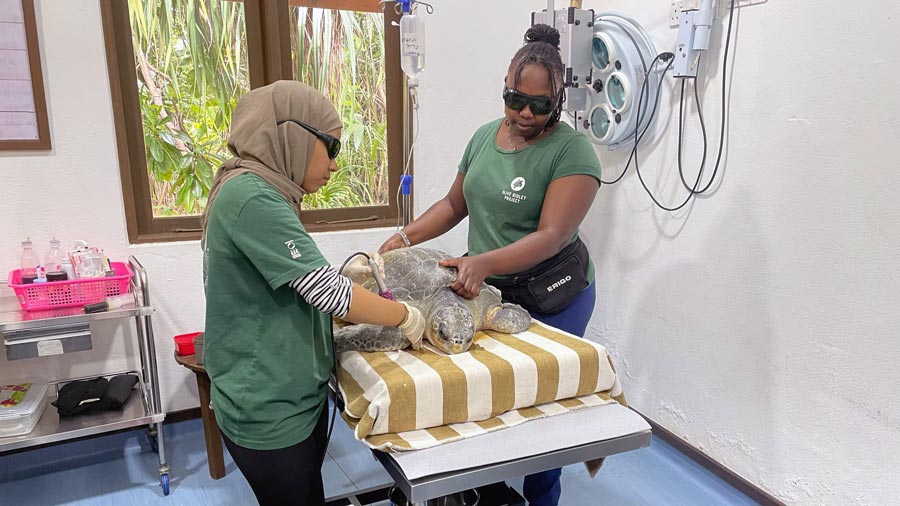
We are the first centre in the world to apply this combination of treatments to sea turtles. Our results demonstrate that, with this advanced approach, even severely injured sea turtles can recover movement, regain strength, and return to the wild.
The limb salvaging protocol is often used in combination with other modes of treatment including:
- Debridement surgery: is a medical procedure where we remove dead, damaged, or infected tissue from a wound to promote healing, prevent infection, and eliminate bacteria.
- X-Rays (Digital Radiography): X-rays help diagnose internal injuries and conditions such as buoyancy syndrome, fractures, and lung disease. Every patient is X-rayed on admission and monitored with follow-up scans throughout treatment.
- Ultrasound: is a vital tool in sea turtle medicine, that helps image soft tissues, organs, blood vessels, and injuries using sound waves. We also use it to sex immature turtles and guide highly precise surgical procedures.
- Endoscopy: an important tool for diagnosing and treating many conditions, allowing internal examination of the lungs, intestinal tract, and the stomach. Our team also uses the endoscope for advanced endoscopic surgeries, including lung repair and exploratory procedures.
Although we use our limb-salvaging treatments whenever we can, sometimes the damage is too severe. In these cases, our veterinary surgeons perform amputation surgery. They always try to save as much of the limb as possible to give the sea turtle the best chance of surviving in the wild. Sea turtles have been documented to successfully survive in the wild after losing a limb.
Other injuries and diseases in sea turtles in the Maldives
Most of our patients are treated for complications caused by entanglement in marine debris. These often include external injuries such as tissue damage and internal conditions like lung disease.
We also see many cases of intestinal disease caused by feeding in degraded reef and seagrass ecosystems. Intestinal disease is complex and has multiple causes. Our veterinary team is at the forefront of developing new treatments, including research into the gut microbiome and probiotic therapies to support digestive health.
Patient case file: Maali
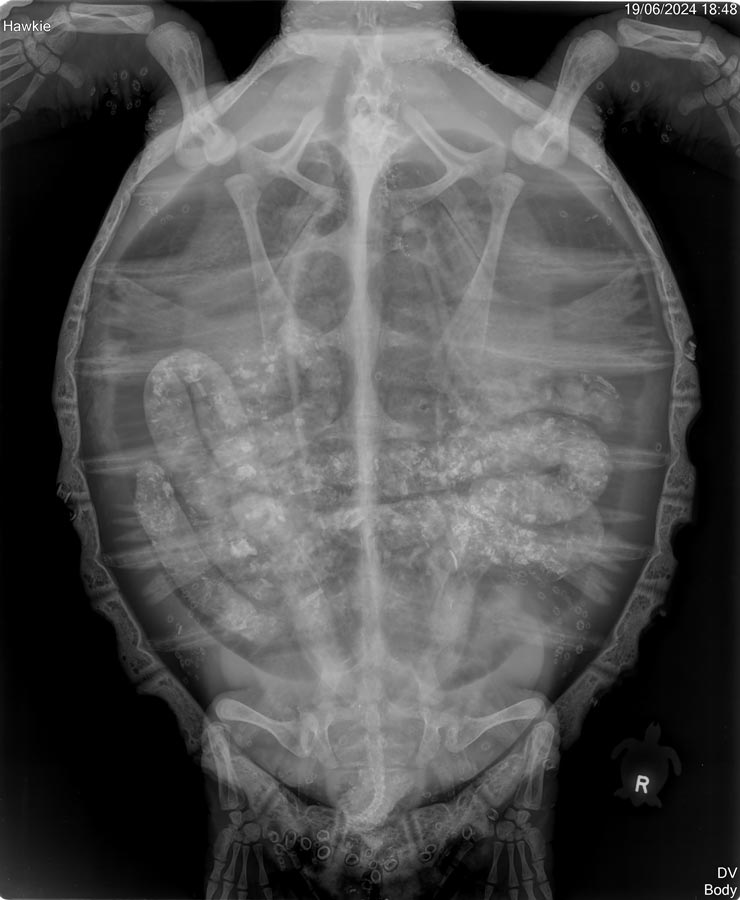
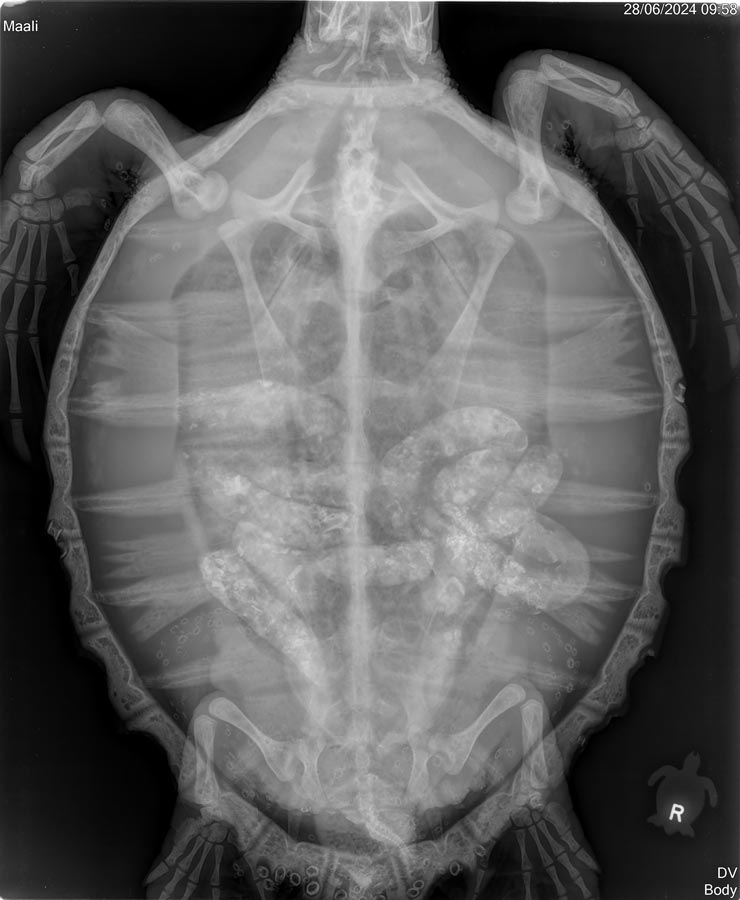
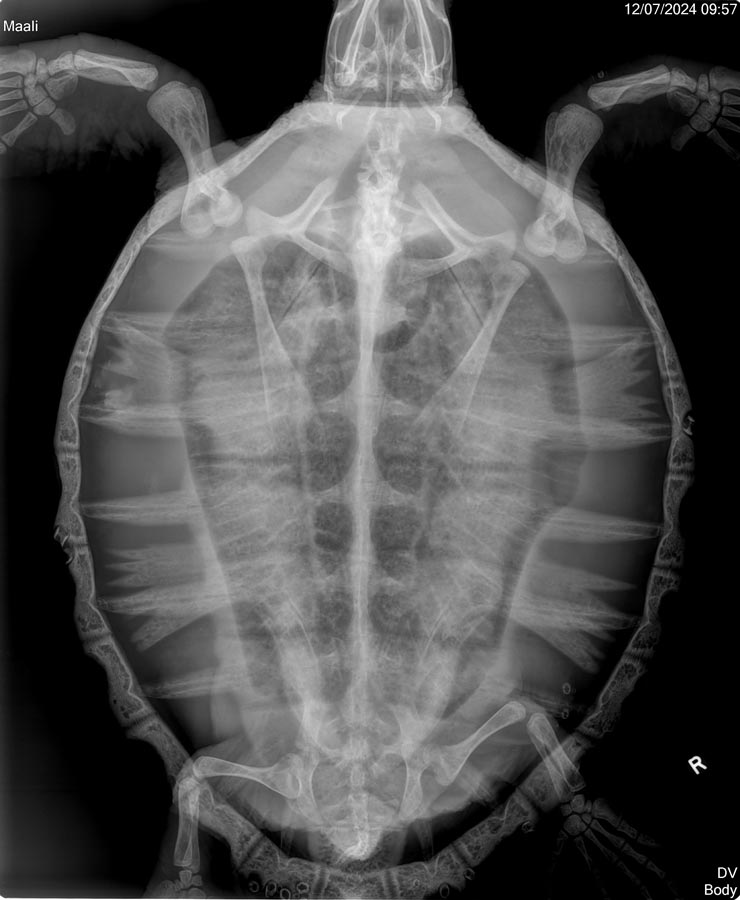
Maali, a juvenile hawksbill, arrived with a blocked gut (image1), but after weeks of intensive therapy, she passed all impacted faeces, regained her appetite, and resumed normal behaviopur (image 2). Her final check-up showed a healthy digestive system (image 3)– ready for release!
Plastic pollution is widespread across the world’s oceans, including the Maldives. However, plastic ingestion rarely results in serious medical issues in our patients. Fewer than 3% of our patients require medical or surgical treatment for it.
All clinical treatments in the Maldives are carried out under permits and with the guidance and support of the Environment Regulation Authority (ERA) of the Maldives.