Along Kenya’s southern coast, sea turtles have always been part of people’s lives and stories. Since fishing is the main activity here, for generations, fishers have seen sea turtles gliding through the waters, sometimes even caught in their nets.
There was a time when sea turtles were regarded as food, much like fish. However, by the 1980s, this practice was outlawed, and sea turtles became protected by law. Even though the harvesting of sea turtles declined, many coastal communities remained unaware of the ecological importance of sea turtles, and of the laws concerning their protected status.
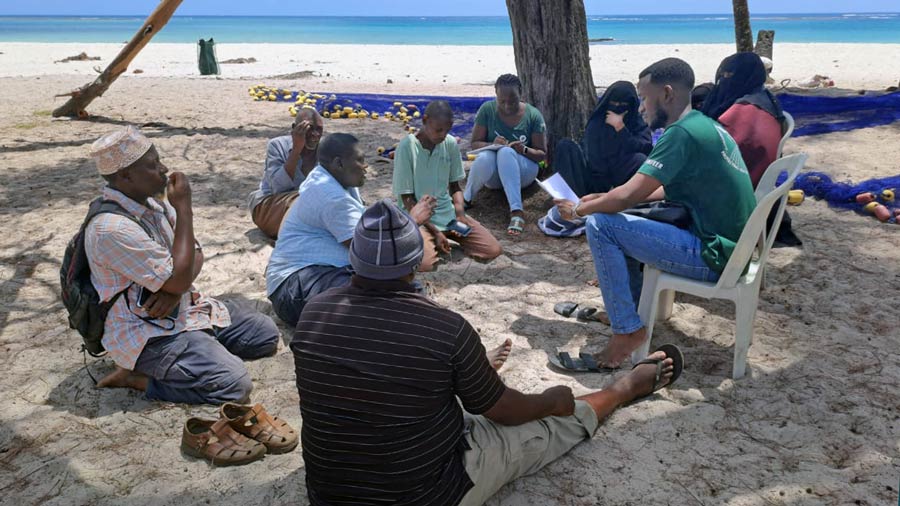
Therefore, in 2022, we decided to go into the villages and learn about conservation perspectives at the grassroots. Through a pilot study, we spoke with fishers and explored their knowledge, attitudes and perceptions of sea turtles. The answers were honest.
“Yes, we know of sea turtles,” many said, “but we don’t know why they are so important. We don’t know the laws for them and we don’t understand what’s so special that so many organisations want to protect them.”
One of the key findings of the study was that fishers largely perceived sea turtles in the context of their livelihoods. Through their day-to-day fishing operations, many had firsthand experience with sea turtle bycatch, highlighting its prevalence in local fisheries.
An idea takes root

From these conversations, Balozi wa Kasa, or the Sea Turtle Ambassador Programme was born. Instead of using a top-down approach, we decided to work hand-in-hand with local fishing communities, by using the existing institution of Beach Management Units (BMUs) along Kenya’s coast.
BMUs are community groups officially recognised by the Kenyan government to manage local fisheries. They bring together fishers, traders, and community members to make decisions for their stretch of coastline.
By working with BMUs, the programme could grow from within the community, and enable members to take up conservation roles. When volunteers stepped forward from nine BMUs, covering nearly 50 km of coastline north and south of the Diani–Chale Marine National Reserve, the programme began in earnest.
The beginning of Balozi wa Kasa
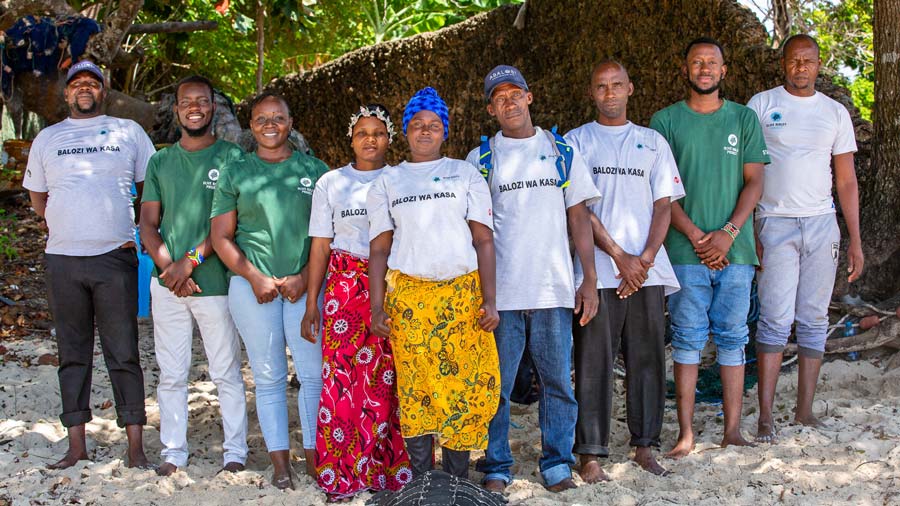
In 2023, the first group of BMU members joined our Balozi wa Kasa training programme. Our team provided knowledge sessions on all things sea turtle related – from their ecological role to conservation laws, safe ways to rescue and release entangled sea turtles, and sustainable fishing practices.
During one meeting, Suleiman Ronga, a fisher in his 40s from Chale-Jeza, shared his story:
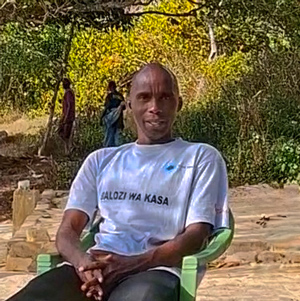
“Back in the day when we captured sea turtles accidentally, our only concern was releasing the animal, and whether it lived or died, we left it up to God. But after our training, we now know how to untangle the sea turtle the right way, without adding injury, and even report the incident.”
Suleiman Ronga,
Today, Suleiman leads other fishers in the Chale-Jeza BMU in protecting sea turtles.
Five main aspects
1. Peer-to-peer learning
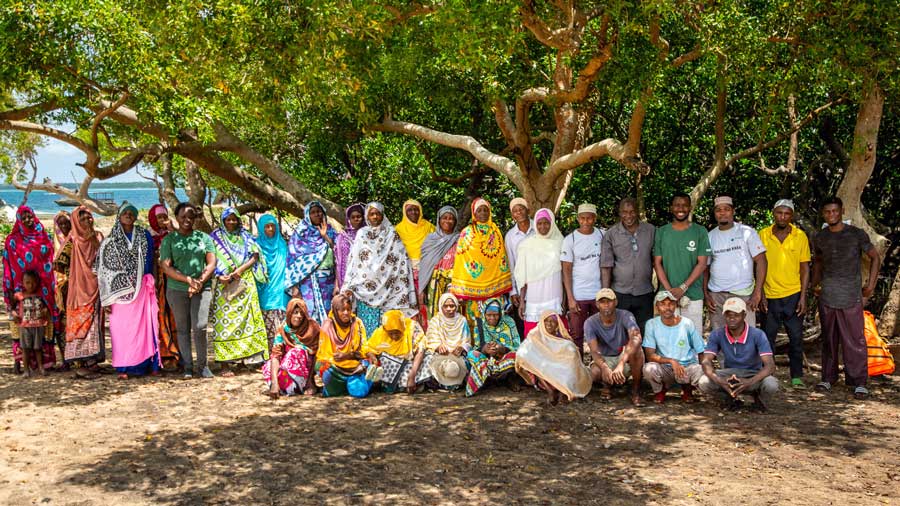
So far, we have certified 129 BMU members to become Balozi wa Kasa — Kiswahili for Sea Turtle Ambassadors (STAs). We equipped them with booklets, posters, and data sheets to help record and share what they learn. While some STAs choose to focus on training fellow fishers, others visit schools, families, and community groups. Creative storytelling has become a powerful tool, as the STAs use skits, songs, and poems to inspire young people and raise awareness in schools and villages. The STAs have also become a part of our annual Diani Sea Turtle Festival, where they teach attendees about sea turtles and how to protect them, proving that fishermen can often be conservation’s strongest allies. As of 2027, through peer-to-peer engagement, STAs have raised awareness of sea turtle conservation among more than 20,000 people across their communities.
2. Strengthening conservation partnerships between people and government
Effective on-ground conservation relies on clear and open communication among all stakeholders. While fishing communities and Fisheries Officials in Kenya have worked together for many years, we found an opportunity to strengthen the connection with the Kenya Wildlife Service (KWS), uniting all bodies under the common goal of sea turtle conservation. Through our programme, Sea Turtle Ambassadors, KWS rangers, and Fisheries Officers in each area now take part in joint workshops and meetings. This teamwork promotes better understanding of laws and regulations, collaborative monitoring of sea turtles, shared responsibility and mutual respect.
3. Understanding bycatch
Our STAs are also participating in research by collecting bycatch data from their own fishing trips and from other fishers who report incidents. Some are also testing simple innovations like LED lights on gill nets to reduce accidental sea turtle captures. This baseline data on sea turtle bycatch that fishers collect is providing a valuable insight into this lesser-understood threat. In the future, we hope to test more bycatch mitigation strategies together with our STAs and fellow fishers.
4. Empowering women leaders
In coastal communities, men traditionally lead fishing activities and hold most roles within the BMUs. Women, on the other hand, work as fishmongers or ‘Mama Karanga’. This role makes them the vital link between fishers and consumers, where they understand and manage market chains, all the while balancing responsibilities at home. Our programme is committed to amplifying the voices of these women, whose contributions to both the economy and environment are often overlooked. We are working with over 40 women STAs, who have become confident community leaders and stand alongside men in advocating for marine protection in their families, communities, and beyond.
5. Forming independent sea turtle committees
As the program evolved, the STAs began forming sea turtle committees within their BMUs, most of which have now been registered as legal entities in Kenya. These committees serve as important avenues for platforming conservation voices in local fisheries management. By using the existing co-management structures, and applying for funding, these bodies will be able to empower local leaders to plan, act, and sustain conservation efforts independently, ensuring that sea turtle protection remains a lasting, community-driven movement.
“The sensitization that was brought by the Olive Ridley Project – Kenya here in Funzi has been received well because even children want to find out more about sea turtles and the laws concerning them. This has highlighted and strengthened sea turtle advocacy.”
Mzee Bakari Zonga, a 70+ fisher and BMU member from Funzi
Support our Balozi wa Kasa (sea turtle ambassadors)
The Balozi wa Kasa Sea Turtle Ambassador Programme shows what’s possible when local voices lead the way. With every new ambassador inducted, every child inspired, and every sea turtle released safely back to the ocean, our coastline grows stronger.
But sustaining this movement takes continued support, from people like you who believe in the power of community-led conservation.
Your contribution helps empower our sea turtle ambassadors to protect marine life along Kenya’s southern coast.